
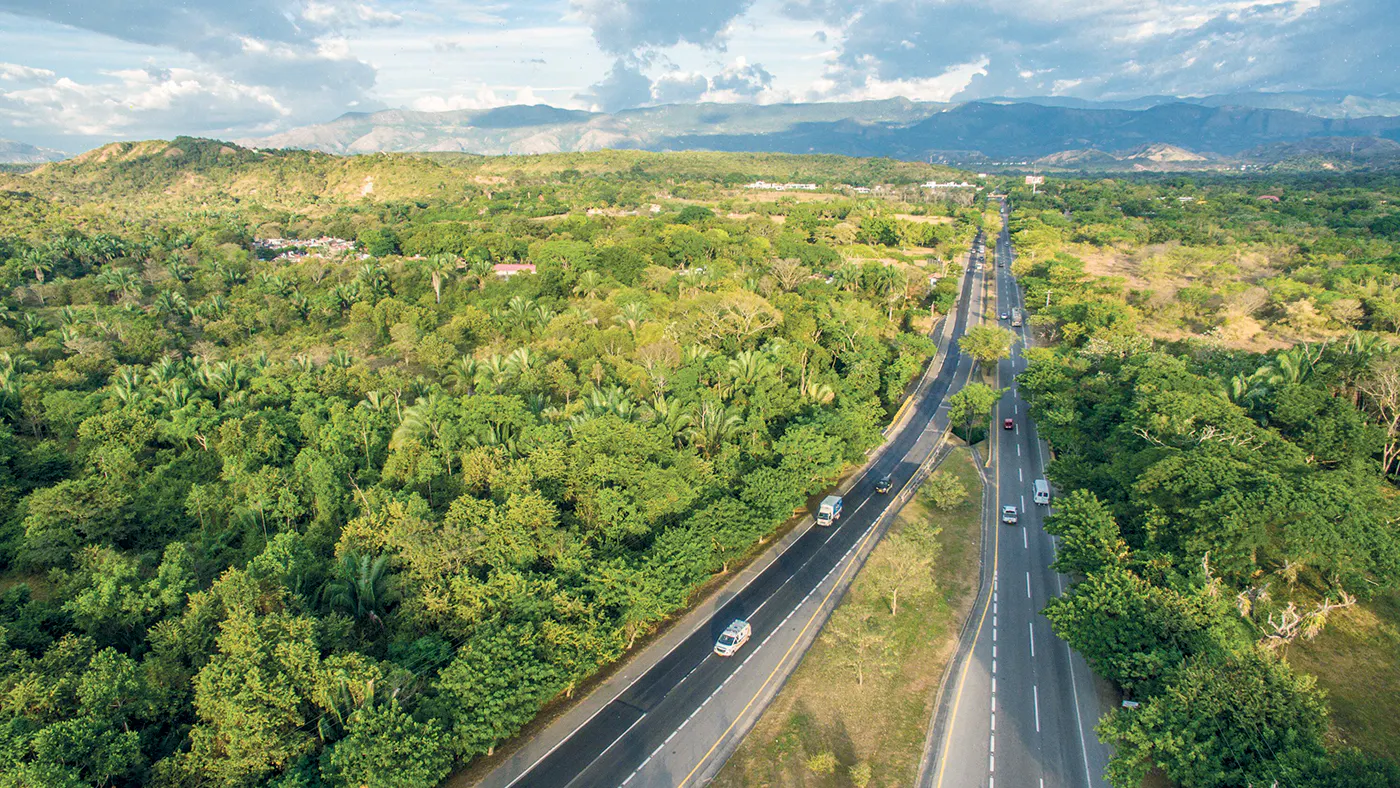
In April 2023, VINCI Highways increased its ownership stake in the Colombian Bogotá–Girardot highway from 50% to 75%.
ENVIRONMENTAL POLICY
VINCI Highways is committed to lowering the carbon footprint of the projects carried out in its role of programme management. One such example is the D4 in the Czech Republic, where all the asphalt mix from the old section and 900,000 tonnes of excavated materials from mining activities in the region were recycled in building the new infrastructure.
Meanwhile, VINCI Highways acts to reduce the carbon footprint of its activities, focusing primarily on three areas. The first is infrastructure lighting, with existing lamps being replaced by LEDs (e.g. in motorway tunnels and the bridge across the Tagus), and systems being installed to adjust light intensity according to traffic flow and weather conditions, as on the Athens–Patras motorway in Greece. The second focus is on transitioning service vehicle fleets : most of the vehicles used for operations on the VINCI Highways network in Europe and the Americas are now electric. The third area involves installing photovoltaic panels on operational buildings (in Germany, Greece, the United States, Canada and Peru). The actions taken by VINCI Highways over the whole of its network have reduced its direct emissions (Scopes 1 and 2) by 21% between 2018 and 2023.
VINCI Highways also contributes to reducing its customers’ emissions (Scope 3) by installing electric vehicle charge points on its network. At end-2023, 338 had been deployed, primarily in Slovakia, Greece and Peru.