
MODELLING INVESTMENTS TO DECARBONISE MOTORWAYS
To make an operational contribution to the ecological transition of mobility, VINCI Autoroutes worked with Patrice Geoffron, economics professor at Université Paris Dauphine-PSL, on modelling the investments required to bring motorways in line with the French and European road maps to carbon neutrality by 2050. An update of this study conducted in 2023 estimated that investments of around €6 billion would be needed for a sample section of 1,000 km of motorway, or around €70 billion for the entire French motorway network. A priority initial tranche of investments of about €15 billion to €20 billion for the entire motorway network would make it possible to obtain tangible results over the next decade. These investments would serve to deploy a network of electric charging stations for light and heavy vehicles and install solar power production facilities along motorway routes to supply the equivalent needs of the electric vehicles that will travel the network in 2030. They would also support the inter-regional network via carpool parking facilities, multimodal transport hubs and reserved lanes for shared mobility. Such investments must be compared with the significant savings that stand to be made, both in terms of CO2 emissions and oil imports avoided. These investments could be financed through the concession contract model, which proved its effectiveness when the national motorway networks were first built.
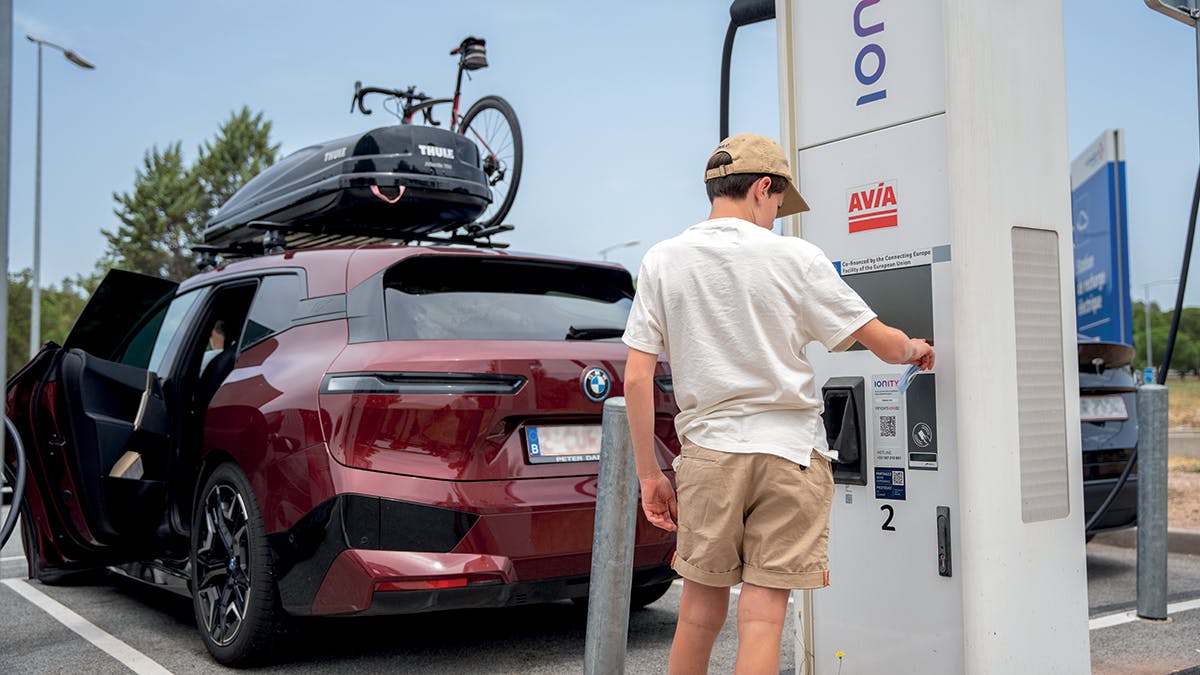
Motorways foster the development of e-mobility. As of the summer of 2023, all service areas in the VINCI Autoroutes network were equipped with electric vehicle charging stations.