“Motorway companies must turn our future highways into a sort of catalyst for decarbonisation. The challenge is not just to put electric vehicles, or hydrogen-powered trucks and buses, on the road. More broadly, we must rethink the overall logic of mobility, such as how railways and motorways, and public and individual transport, can complement each other.”
Long-distance electric mobility
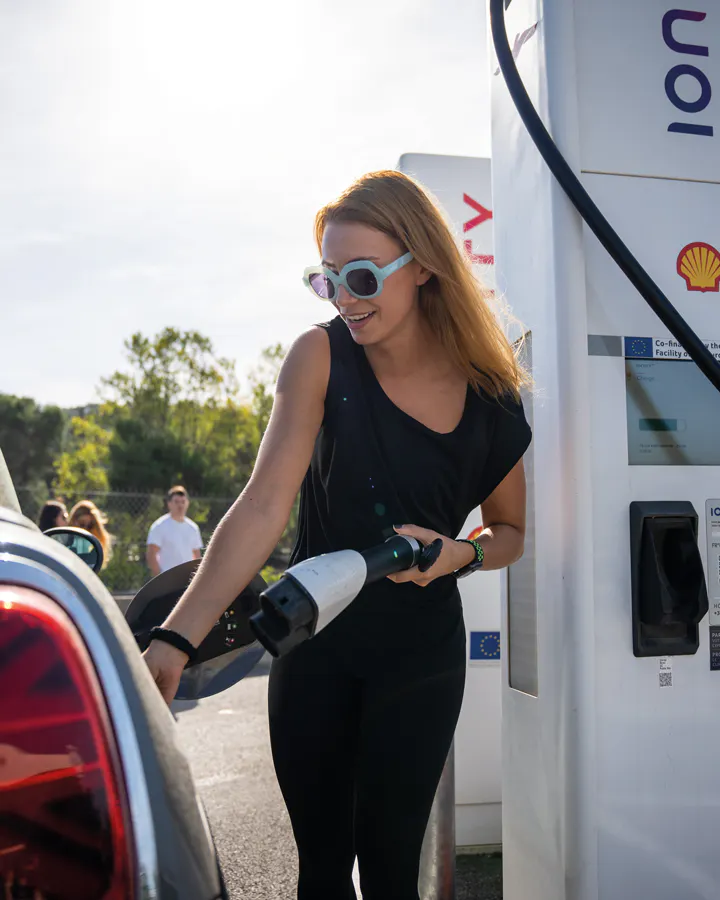
THE MOTORWAY, as the backbone of road transport in France, will drive the ascent of electric mobility by enabling electric vehicles, which are still mostly used in urban and suburban areas, to travel long distances. Electric travel is already a reality in the VINCI Autoroutes network in France, whose 180 service areas are now equipped with charging stations – more than 1,600 charge points, of which three-quarters are superchargers able to fully replenish a car battery in about 30 minutes. Although this coverage meets current needs, the exponential growth of electric vehicles, expected to soar from 3% of the total fleet today to 25% in 2030 and 45% in 2035, will require seven times as many accessible chargers, or an average of 60 to 70 chargers at each service area, instead of nine currently.
Hydrogen mobility
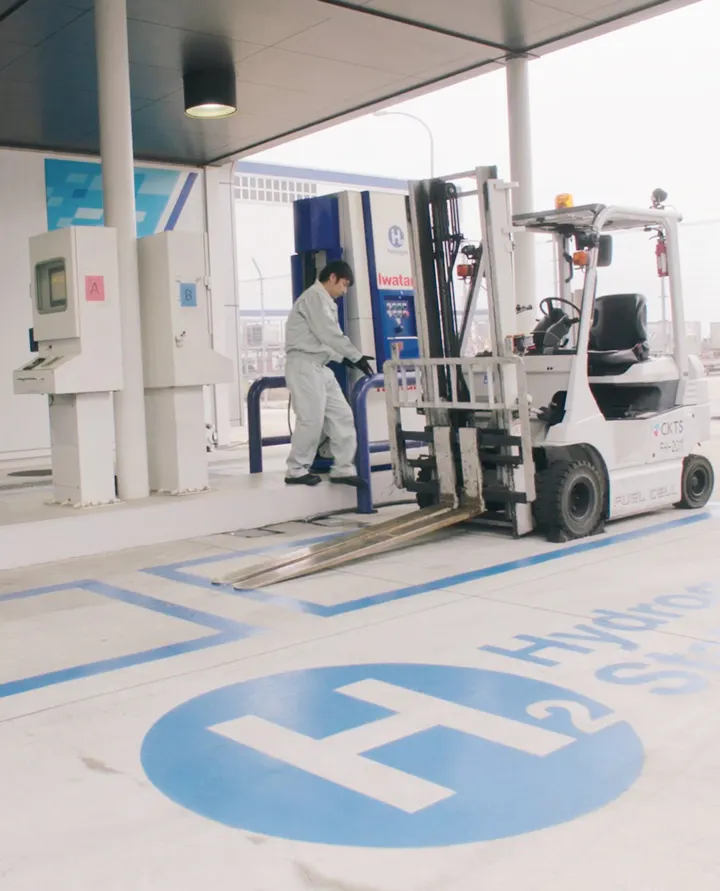
VINCI AIRPORTS is also experimenting with low-carbon hydrogen mobility at Lyon-Saint Exupéry airport in France and its three airports in Japan (Kansai International, Osaka Itami and Kobe). It uses gaseous hydrogen to power its bus service as well as the forklifts used for cargo operations. For the longer term, in partnership with Airbus and Air Liquide, VINCI Airports is studying how to develop the infrastructure required to serve future liquid hydrogen-powered aircraft.
In addition, VINCI Concessions is a founding partner of the Clean H2 Infra fund dedicated to low-carbon hydrogen infrastructure. Alongside the fund, it participated in the financing of H2 Mobility, the leader in hydrogen refuelling stations for road transport in Germany. VINCI Concessions is also an investor in Hype, an integrated network fueling a fleet of hydrogen-powered taxis in the Greater Paris area.