
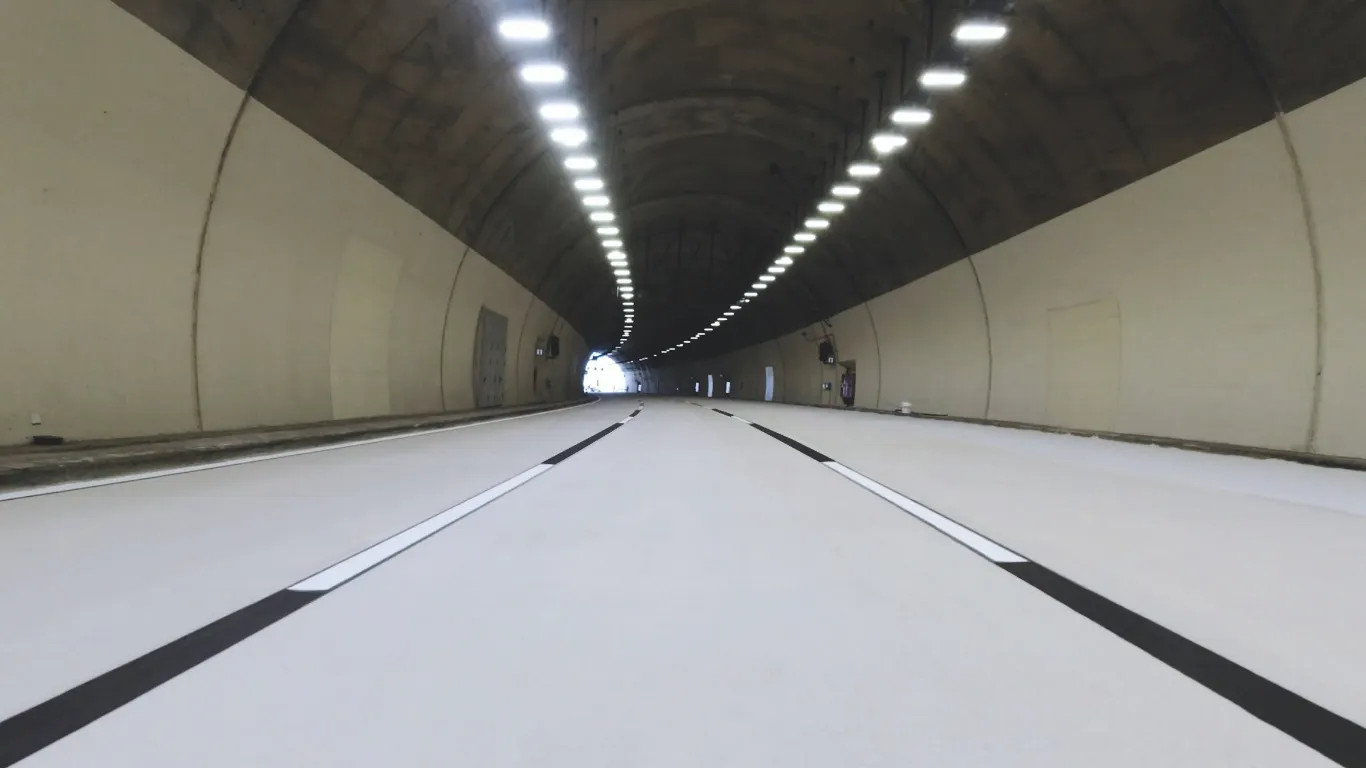
On the Athens–Corinth– Patras motorway, VINCI Highways is testing a light-coloured pavement surfacing designed to improve visibility and reduce consumption of energy for lighting in the Theseus tunnel towards Athens.
ENVIRONMENT
In line with the Group’s commitments, VINCI Highways takes steps to reduce the carbon footprint of its activities, focusing primarily on three areas. The first area concerns infrastructure lighting. This includes replacing existing lamps with LEDs in tunnels, installing lighting systems that adapt to traffic flows and weather conditions in real time – as on the Athens–Patras motor-way interchanges in Greece – and using light-coloured road surfacing materials that better reflect light and reduce electricity consumption, as in a tunnel in Greece. The second focus entails renewal of service vehicle fleets. Since 2022, con-cession operators in Germany, Greece, Portugal, the United Kingdom and Peru use only electric vehicles. The third area tackles decarbonising the electricity consumed by installing solar power plants on operating sites, such as the Ohio River Bridge in the United States, Via Solutions Südwest (A5) in Germany and Lima Expresa in Peru, which also participates in a local reforestation programme to offset residual emissions. In Greece, the solar power plants operated by Olympia Odos should generate installed power of almost 10 MWp, with the aim of reaching energy self-sufficiency by 2025.
The actions rolled out by VINCI Highways over the whole of its network have already enabled it to reduce its direct emissions (Scopes 1 and 2) by 30% between 2018 and 2022. In the longer term, VINCI Concessions and its subsidiary VINCI Highways are committed to developing hydrogen-based road mobility (see Close-up).
VINCI Highways also contributes to reducing its customers’ emissions by equipping its network with electric vehicle charging stations, such as those currently being deployed on the Via PR1BINA in Slovakia. This expressway has also implemented a biodiversity preservation programme, with the development of 16,000 sq. metres of natural meadows and installation of 60 beehives along the road.
30% Reduction in VINCI Highways’ direct CO2 emissions (Scopes 1 and 2) between 2018 and 2022.