
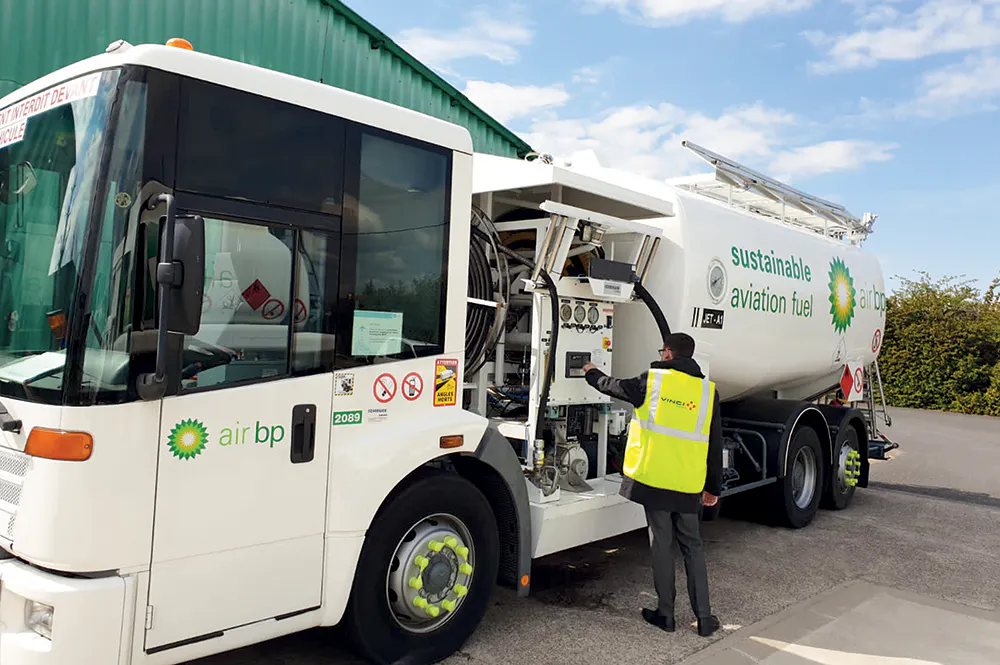
The carbon footprint of sustainable aviation fuel is 80% smaller when compared to conventional fossil kerosene.
3 Rewarding airlines for emissions reduction
VINCI Airports has introduced an eco-modulation system in France and at London Gatwick to adjust landing fees based on aircraft emissions and thereby support the aviation sector’s efforts to lower its carbon footprint. At several airports in its network, VINCI Airports also provides airlines with sustainable aviation fuelling services using biofuels produced from used cooking oil.
4 Decarbonising building maintenance
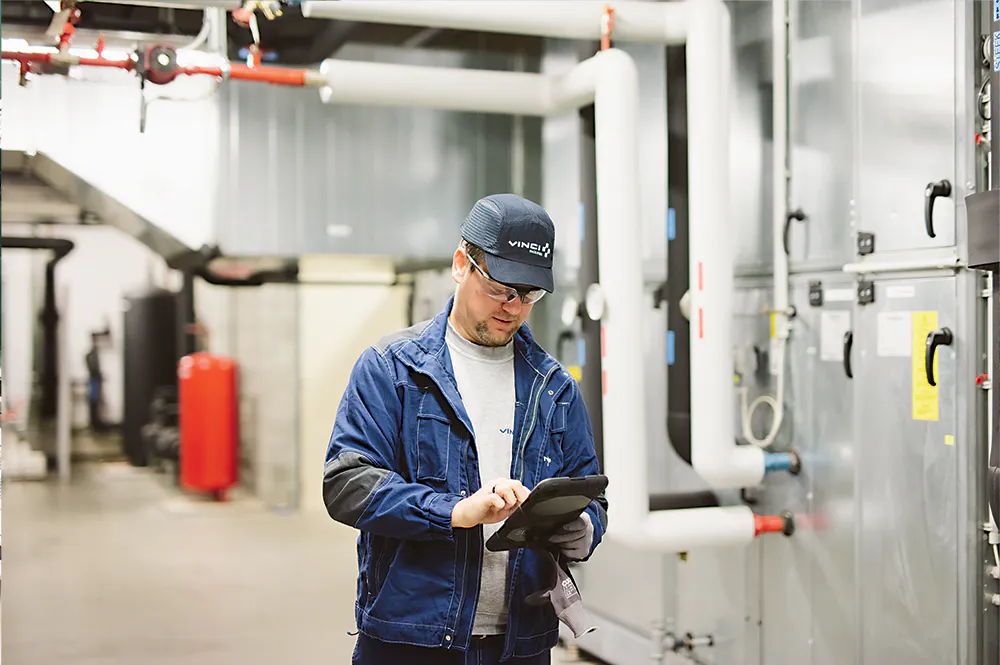
VINCI Facilities (VINCI Energies) offers its building maintenance customers two decarbonising options. With its “low-carbon contract”, VINCI Facilities commits to an emissions reduction plan using the solutions initially agreed upon. With its “carbon-reducing contract”, VINCI Facilities goes further, by identifying actions to improve energy efficiency and how they can be implemented to meet the customer’s emissions reduction targets. A solution developed by VINCI Facilities, called P2C, calculates the carbon footprint of a maintenance contract, covering Scopes 1, 2 and 3, so that the most effective low-carbon or carbon-reducing solutions over a building’s entire life cycle can be proposed to customers.
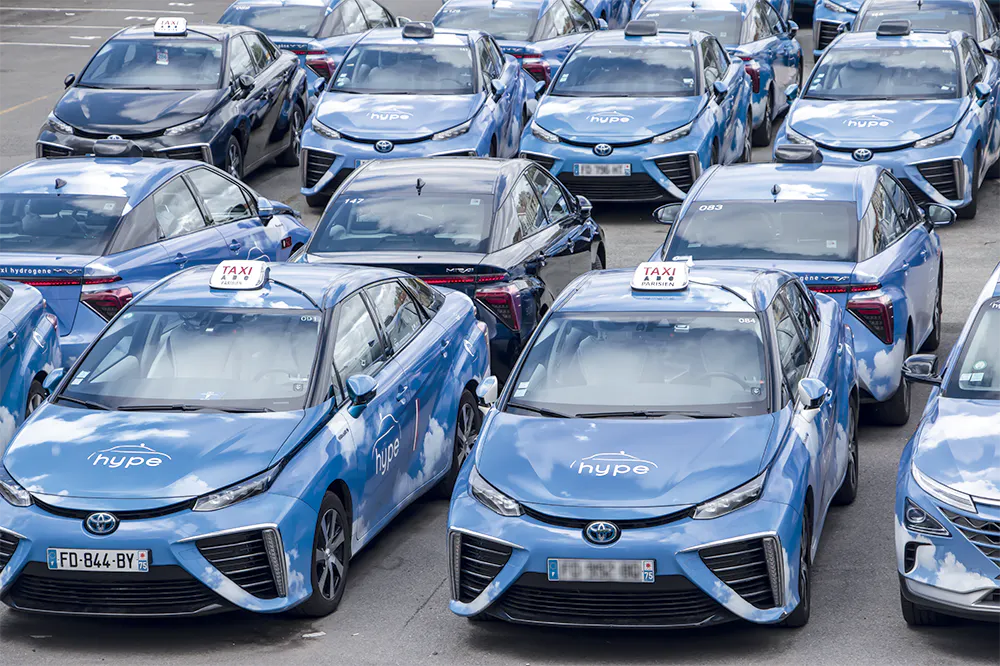
VINCI Concessions invested €15 million in Hype, the first integrated platform for hydrogen mobility in France. VINCI Energies is Hype’s exclusive partner for the construction of new hydrogen production and distribution infrastructure to fuel its fleet of hydrogen-powered taxis.
5 Investing in hydrogen
VINCI has co-founded the largest global fund for low-carbon hydrogen infrastructure and is expanding its initiatives in all business lines to develop this new source of energy. For example, it created a range of infrastructure construction services, under the Hyfinity brand. It also invested in Genvia, producing a pilot manufacturing line for high-temperature electrolysers at the company’s facility in Béziers (southern France). The Group has built the first airport hydrogen stations for ground vehicles, while collaborating with major aviation sector players to develop liquid hydrogen for airplanes.