

The energy crisis in 2022 corroborated our observation that investment to decarbonise roads, and particularly motorways, is absolutely vital. We now know that stepping up this investment really would help us meet our environmental objectives (climate change, air quality, etc.) and achieve energy security by reducing our need to import fossil fuels.
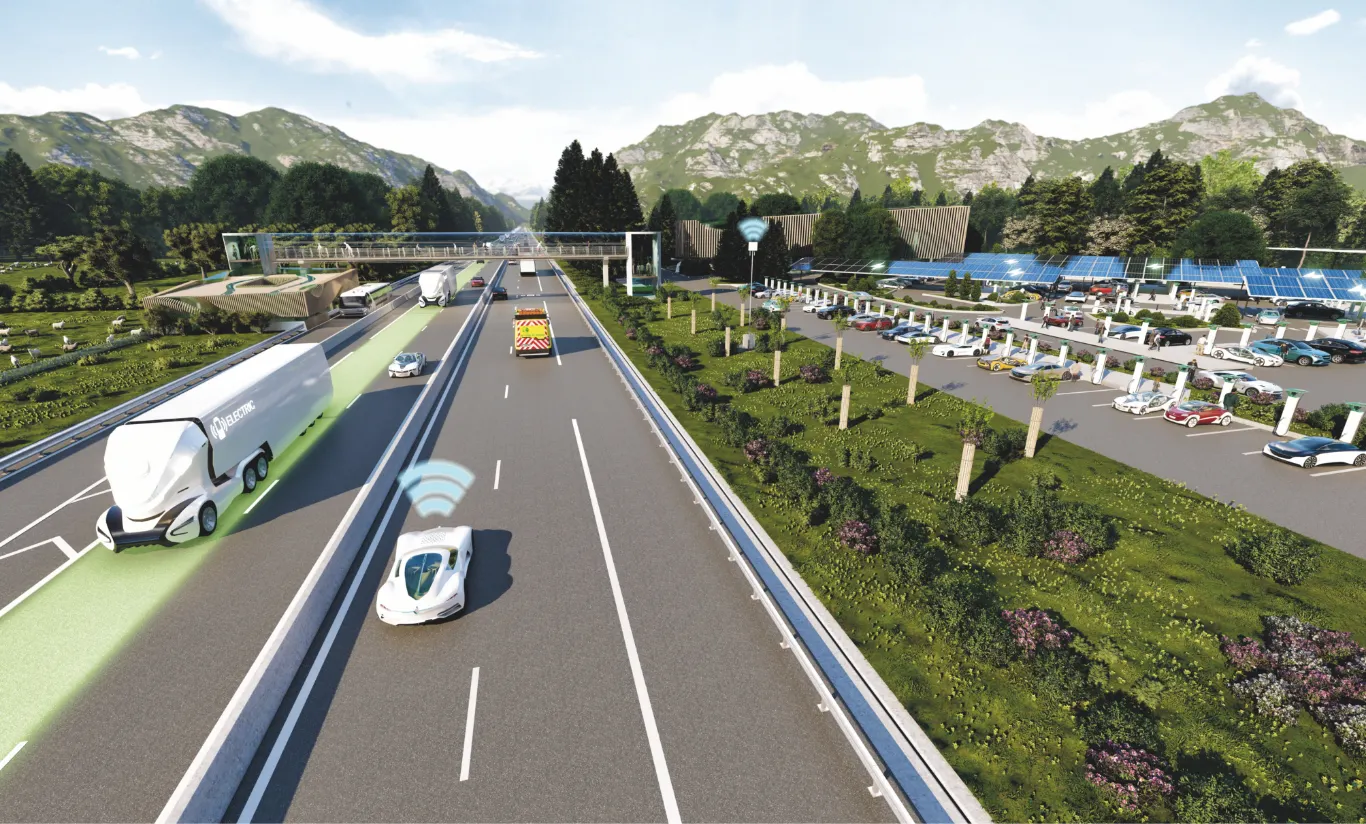
TOWARDS LOW-CARBON MOTORWAYS IN 2030
VINCI Autoroutes is contributing to the ecological transition of mobility and has developed a motorway transformation plan structured into five priorities.
Decarbonised mobility
To decarbonise light vehicle travel, VINCI Autoroutes is equipping its network with reliable, affordable, ultra-fast e-charging stations (over 150 kW) that enable EV drivers to make long-distance trips under the same conditions as drivers of conventional internal combustion vehicles. It will install enough of these charge points across the whole of France to cater for peak long-weekend and holiday traffic.
Shared mobility
To boost the average vehicle occupancy rate and encourage commuters to combine motorway use with public transport, VINCI Autoroutes is working closely with regional authorities to build a network of carpool parking facilities and multimodal transport hubs across France. It is also introducing reserved motorway lanes for carpoolers and express bus services.
Renewable electricity generation
If photovoltaic systems were installed across VINCI Autoroutes entire motorway infrastructure (solar car park canopies and ground-mounted solar facilities) they would generate an estimated 1 GW of electricity – enough to cover the needs of all the light electric vehicles using its network in the future.
Innovation and reducing congestion
The deployment of free-flow tolling and the interaction of cooperative intelligent transport systems with autonomous vehicles will significantly improve traffic flow, and reduce the fuel consumption – and consequently the carbon emissions – of internal combustion vehicles still in use.
Natural environments
To reduce the impacts of motorway infrastructure on ecosystems, VINCI Autoroutes is looking into developing an ecological restoration plan for its motorways (unsealing land under concession, rehabilitating motorway sections in urban areas, restoring ecological connectivity, protecting aquatic environments).Motorway infrastructure will also have to be adapted to the consequences of climate change and boost its resilience to extreme weather events.