

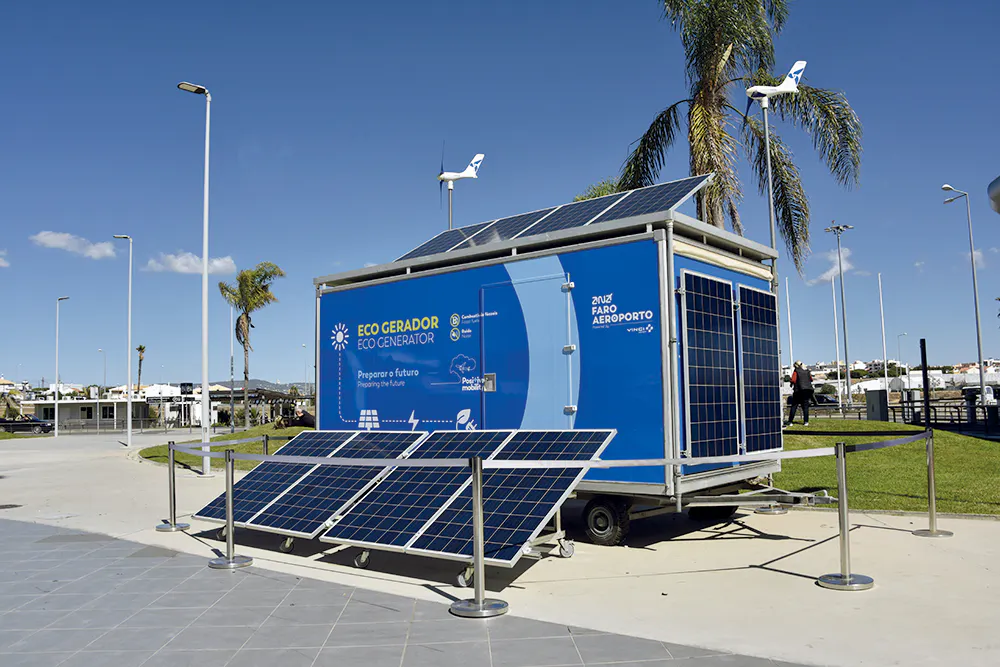
VINCI’s commitments
- Reduce its direct greenhouse gas emissions (Scopes 1 and 2) by 40% by 2030 compared with 2018 levels.
- Reduce its indirect upstream and downstream emissions (Scope 3) by 20% by 2030 compared with 2019 levels, by taking action across the value chain of the Group’s businesses.
- Adapt structures and activities to improve their climate change resilience.
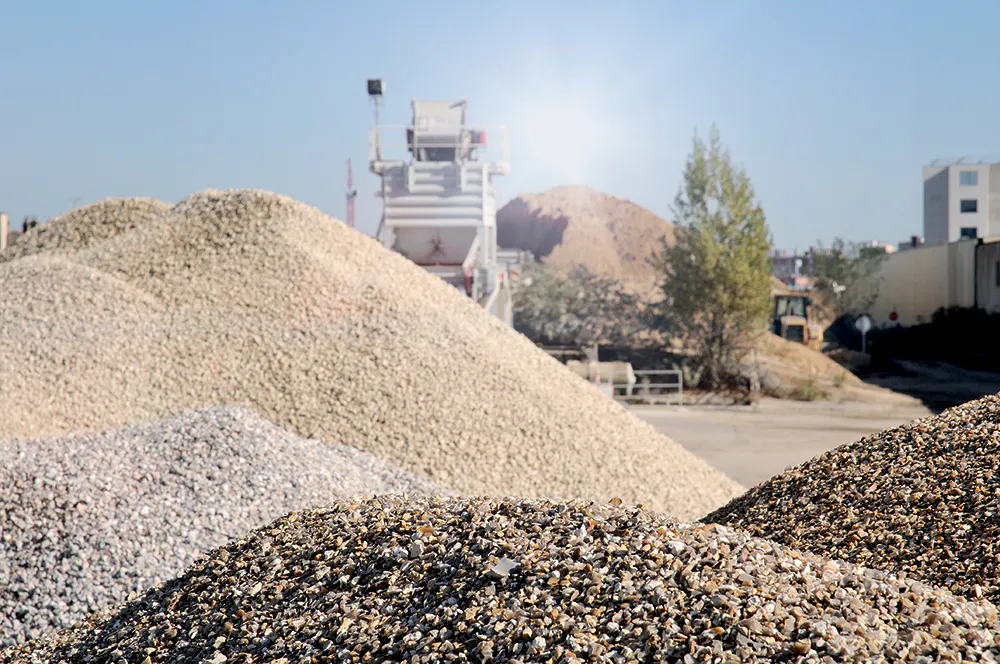
OPTIMISE RESOURCES THANKS TO THE CIRCULAR ECONOMY
In a context of increasing scarcity of natural resources, some of which are essential to the operation of its businesses, VINCI intends to limit their footprint by making them part of a circular economy approach. The Group will achieve this objective by improving its design and production processes, reducing the extraction of virgin raw materials, favouring efficient techniques and behaviour, and promoting reuse and recycling.
Attention to supply goes hand in hand with improving waste management – the Group’s business sectors are among the leading generators of waste. VINCI is also developing effective solutions for the recovery of its own waste and that produced by its users, and is incorporating recycled materials into its products and services, particularly in its road activities.
CIRCULAR ECONOMY AMBITION FOR 2030

20 Mt of recycled materials produced by VINCI Construction.

ZERO WASTE to landfill for all concessions.

45% of reclaimed asphalt pavement from VINCI Autoroutes recycled at its own worksites.
-
More than 50% of revenue generated by VINCI Immobilier through land recycling operations.
CIRCULAR ECONOMY PERFORMANCE IN 2022
-
14 Mt of recycled aggregate pavement out of VINCI Construction’s total annual production.
-
18 sites with zero waste to landfill for VINCI Concessions.
-
46% of reclaimed asphalt pavement from VINCI Autoroutes recycled at its own worksites.
-
57% of VINCI Immobilier’s revenue generated through land recycling.
VINCI’s commitments
- Promote the use of construction techniques and materials that economise on natural resources.
- Improve waste sorting and recovery.
- Expand the offer of recycled materials to limit extraction of virgin materials.