
Close-up


For our client as well as for the Balfour Beatty-VINCI consortium, environmental awareness is a priority. As a result, we have modified our approach to design and construction. This project is a unique opportunity to showcase our expertise in sustainable transport infrastructure. It illustrates the growing importance of being proactive and getting involved with our subcontractors, stakeholders and clients. Together we can develop solutions that run the gamut from very simple to highly innovative, but that reduce our carbon impact while maintaining the high quality of what we build. This is a daily challenge that we are all tackling head on with enthusiasm.
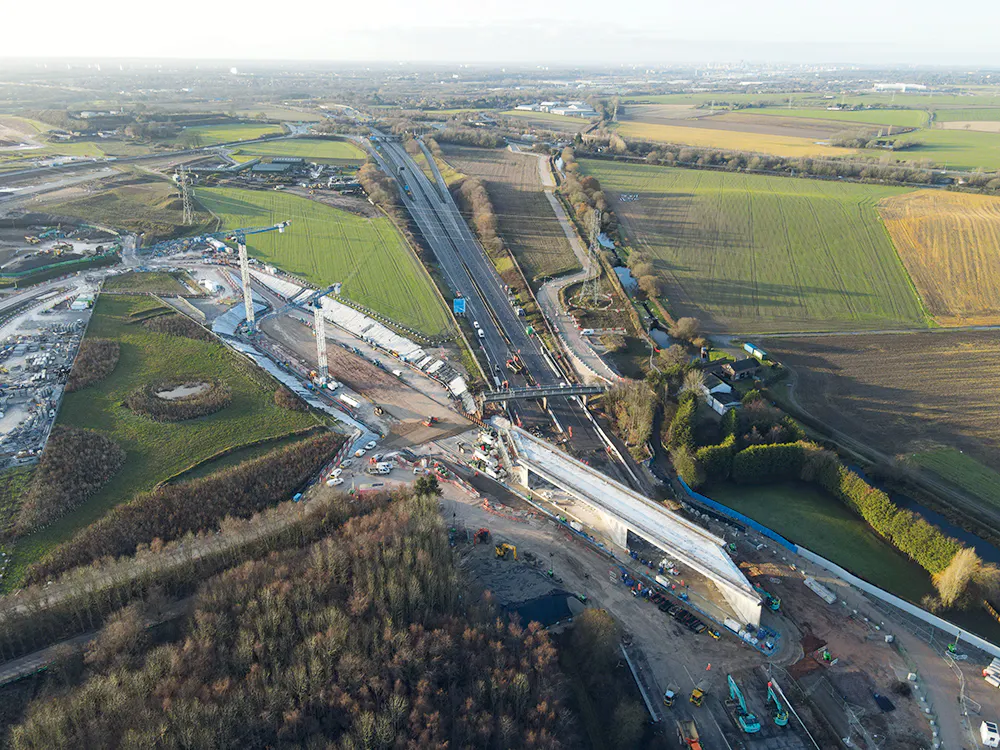
SYNERGY INCREASED AND WORKSITE EMISSIONS SLASHED ON THE HIGH SPEED 2 LINE (UK)
VINCI Construction and partner contractor Balfour Beatty are responsible for the main civil engineering packages on the future High Speed 2 line between London and Birmingham and have set ambitious environmental targets.
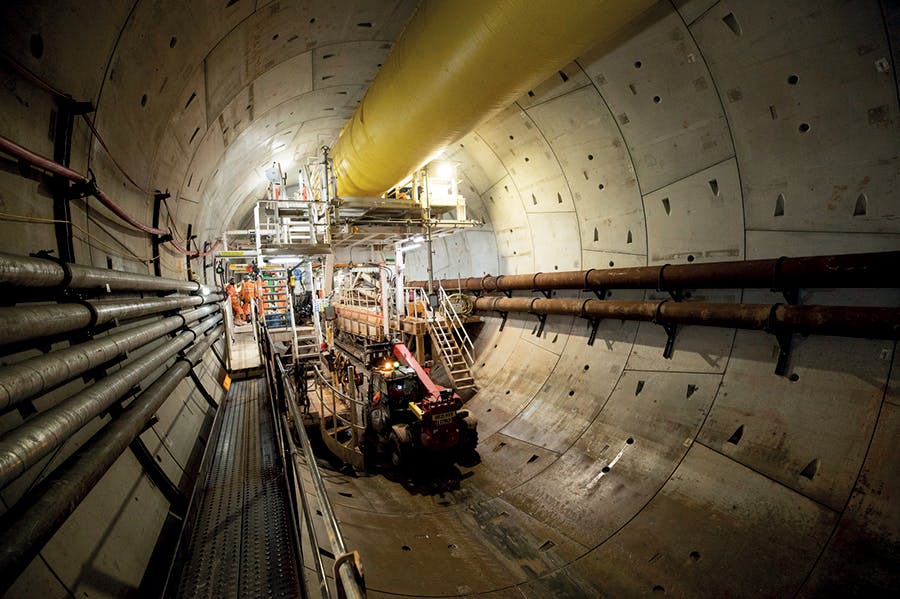
VINCI Construction and partner contractor Balfour Beatty are responsible for the main civil engineering packages on the future High Speed 2 line between London and Birmingham and have set ambitious environmental targets.After having been awarded the design phase of lots N1 and N2, the two partners were awarded the phase 2 (construction) contract, which covers 91 km along the northern portion of the rail line, including 51 viaducts totalling over 14 km, four twin tunnels totalling 14.5 km, 150 standard engineering structures and 40 million cu. metres of cut and landfill, in addition to the Old Oak Common station in London.
In 2022, 4,500 people were employed on this gigantic project, which involves entities from all three of VINCI Construction’s main pillars: the Major Projects Division, whose teams oversee project management and earthworks; Specialty Networks, principally through Bachy Soletanche Ltd (foundations, cut-and-cover trenching), Freyssinet (post-tensioning) and Sixense (monitoring); and Proximity Networks, through UK civil engineering subsidiary Taylor Woodrow.
The consortium is pursuing an ambitious goal: to reduce the project’s carbon footprint by 50% compared with conventional work methods, by optimising the design of foundations, engineering structures and excavation profiles, and improving materials (very-low-carbon concrete, recycled steel, etc.) and transport vehicles. For example, earthmoving teams use the Linaster production monitoring and analysis platform developed by VINCI Construction, and the vast majority of worksite plant and equipment is monitored to optimise fuel consumption in real time.
50% the target to reduce the project’s carbon footprint compared with conventional methods.