
VINCI AIRPORTS
As the world’s leading private operator in its sector, VINCI Airports manages a network of more than 70 airports across 14 countries. As a global integrator, it finances, develops, builds and manages airports, leveraging its investment capacity and know-how to optimise operational performance, modernise infrastructure and steer their environmental transition.
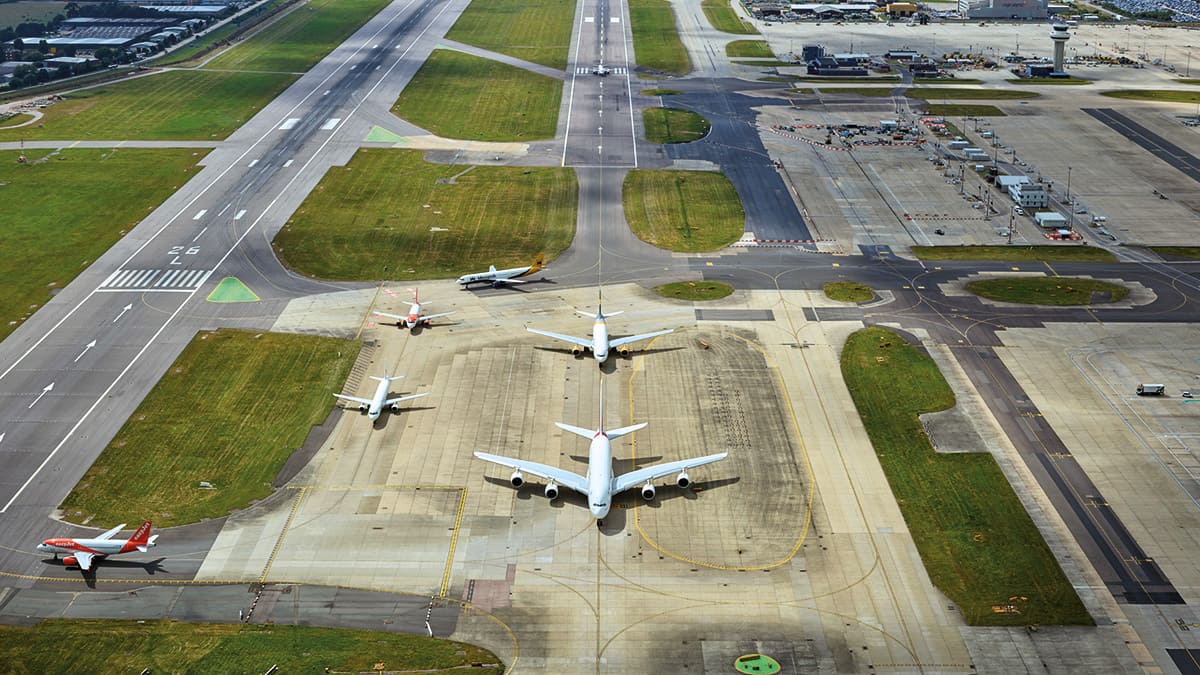
With use of the second runway at London Gatwick for take-offs, approved in 2025, the airport’s capacity will be increased to 80 million passengers a year over the next decade.
Air traffic continued to grow in 2025 and is now firmly above pre-pandemic levels. VINCI Airports stepped up its investment in modernising infrastructure and continued with its programme to decarbonise its activities.
TRAFFIC AND ECONOMIC DATA
The VINCI Airports network welcomed 334 million passengers in 2025, up 5% compared to 2024. Supported by positive trends in tourist travel and VFR (visiting friends and relatives), passenger traffic rose in almost all the network’s airports, with growth of 12% in Hungary, 10% in Japan, 8.9% in Mexico, 8.7% in Brazil and 4.7% in Portugal compared to 2024. In Japan, Kansai International airport welcomed a record-breaking 2.55 million international passengers in August 2025 (up 19% from 2024), thanks in particular to the Osaka World Expo. Also in August, Serbia’s Belgrade airport crossed the symbolic threshold of 1 million passengers a month for the first time, while Cabo Verde recorded the highest ever monthly traffic observed in its four international airports. The Edinburgh and Budapest airports, which joined the network in 2024, delivered solid performances, with increases in traffic of 7.5% and 12% respectively.
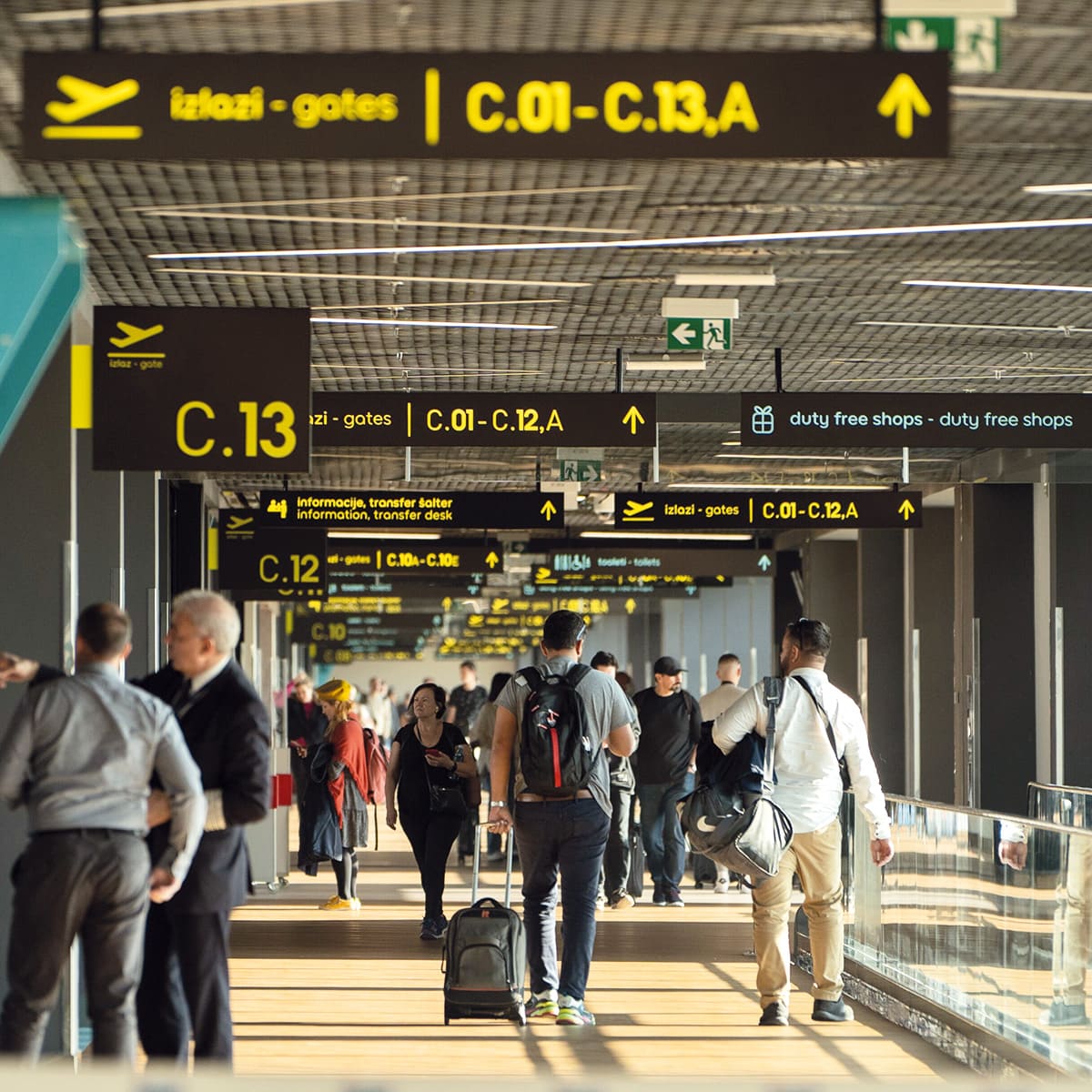
Extension works at Belgrade airport in Serbia were delivered in 2025.
334m passengers were welcomed across the VINCI Airports network.
Against this backdrop, revenue rose to €4.8 billion, an increase of 6% in actual terms and 5.8% on a like-for-like basis. At the same time, sound management of operating expenses allowed VINCI Airports to maintain Ebitda at a high level of 63% of revenue (€3 billion, up 5.5% over the full year). Investment, allocated primarily to the modernisation and environ mental optimisation of infrastructure and to enhancing the passenger experience, amounted to €762 million (excluding unconsolidated concessions).