
Take action as a community-driven company
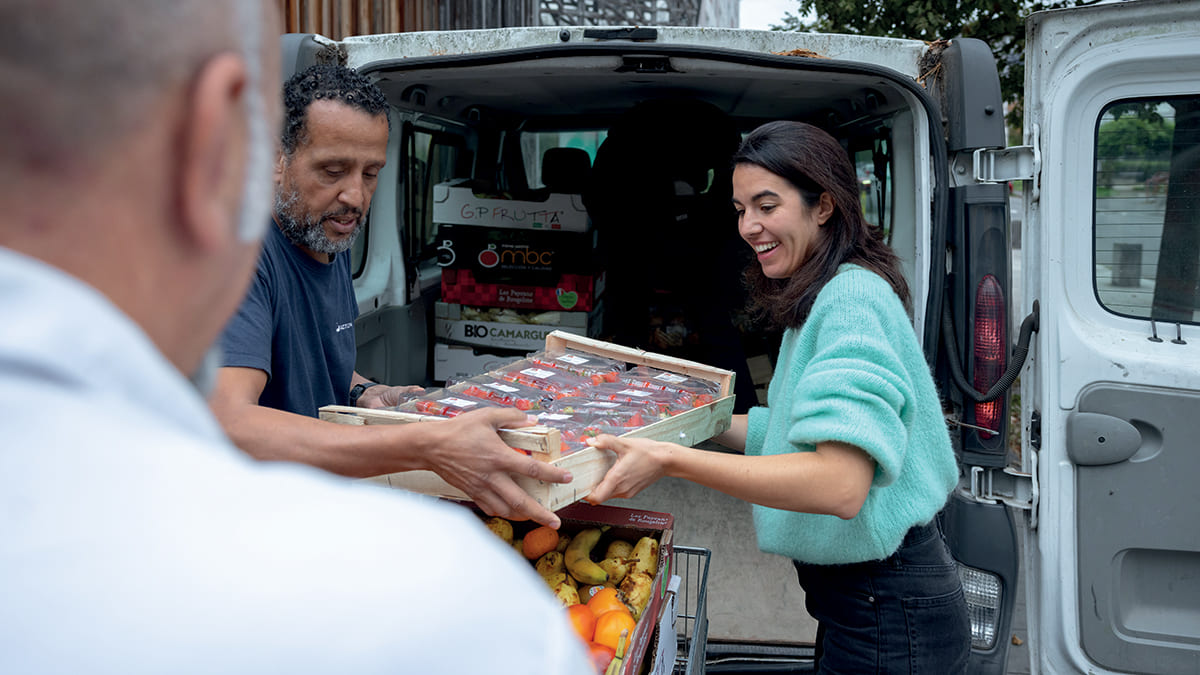
VINCI is committed to encouraging and guiding the civic engagement of its employees and companies, in particular through its foundations and endowment funds. In liaison with solidarity non-profits, it supports locally focused projects that help strengthen social ties and help the long-term unemployed back into employment. The Fondation VINCI pour la Cité, active in France, and its 15 sister organisations in 18 countries around the world, supported 633 projects with 2,527 engagement initiatives by VINCI employees. More than €7.2 million in grants was awarded in 2025.
Along with this programme, other community initiatives are taken by the Group’s business lines, divisions and companies. These include Issa in Africa, to support the economic and social development of African regions and local communities, the Fonds SEA pour la Transition des Territoires, and the Chantiers et Territoires Solidaires endowment fund to support public-interest projects located near Grand Paris Express worksites.
Partner with regions
VINCI companies are firmly rooted in the regions. They contribute to the growth of economic activity, employment and tax take.
Priority is on working with local suppliers and subcontractors to make a lasting and inclusive contribution to regional growth. This goes hand in hand with a responsible procurement policy, based on identifying risks, considering non-financial criteria in procurement decisions, and supporting suppliers and subcontractors in their social and environmental practices, in line with the Group’s commitments. To accurately measure VINCI’s footprint in France, the consultancy Utopies® conducts a study every two years. The findings of the most recent study confirmed the far-reaching impact of VINCI’s businesses in a wide variety of sectors across all regions. Group companies can draw on this information when developing their strategy for relations with their local regions.
Respect human rights
In all the countries where it operates, VINCI has a responsibility to prevent the risk of human rights violations. The Group exercises heightened vigilance in five areas: recruitment practices and labour migration; working conditions; living conditions; practices relating to subcontractors and temporary employment agencies; and relations with local communities.
For each of these areas, guidelines have been included in VINCI’s Guide on Human Rights, available in 24 languages.
This document applies to all VINCI businesses and locations. Additional tools are available to help identify risks and apply guidelines relating to actual businesses and their operating conditions. All Group entities have access to the Managing Human Rights platform on the vinci.net intranet. By answering more than 200 questions, Group companies can measure their practices meticulously, objectively and accurately before implementing the appropriate corrective actions. By the end of 2025, almost 146 subsidiaries in operation, representing nearly 45,000 employees in 50 countries, were covered by human rights assessments carried out by assessors from the Group’s and its business lines’ head offices. The Group is also committed to following up on the evaluations carried out, particularly in priority countries. VINCI regularly discusses its human rights policy with its multiple stakeholders (employee representatives, employees, investors, students, NGOs, research centres, etc.) to improve the effectiveness of its actions.
Performance in 2025
VINCI is ranked in theTOP 15 most attractive employers in France by business and engineering schools (source: Universum ranking – 5 years post-secondary education) and is No. 1 in terms of “autonomy and empowerment” for engineering students
In 2025, more than 8,500 young people were enrolled in work-based training programmes in the Group.
At the end of 2025, human rights assessments covered a total of nearly 45,000 VINCI employees, i.e. nearly 24% of the Group’s workforce outside France and 67% of the workforce in non-OECD countries.
Foster social dialogue
At the Group level, as well as in its business lines, divisions and companies, VINCI ensures the quality of social dialogue with trade unions and employee representatives to give meaning to the company’s collective purpose. Within each entity, close relations that are adapted to each business carve out a real role for labour representatives to play. The European Works Council and the Group Works Council (covering France) met 21 times in 2025.