
INNOVATION, R&D AND FORESIGHT BOLSTERING OUR BUSINESSES AND REGIONS
VINCI implements a policy of innovation, research and development, and foresight thinking that connects its teams with academics and startups for close collaboration. All VINCI businesses participate in cross-business structures that span the Group, while driving innovations specific to their sectors.
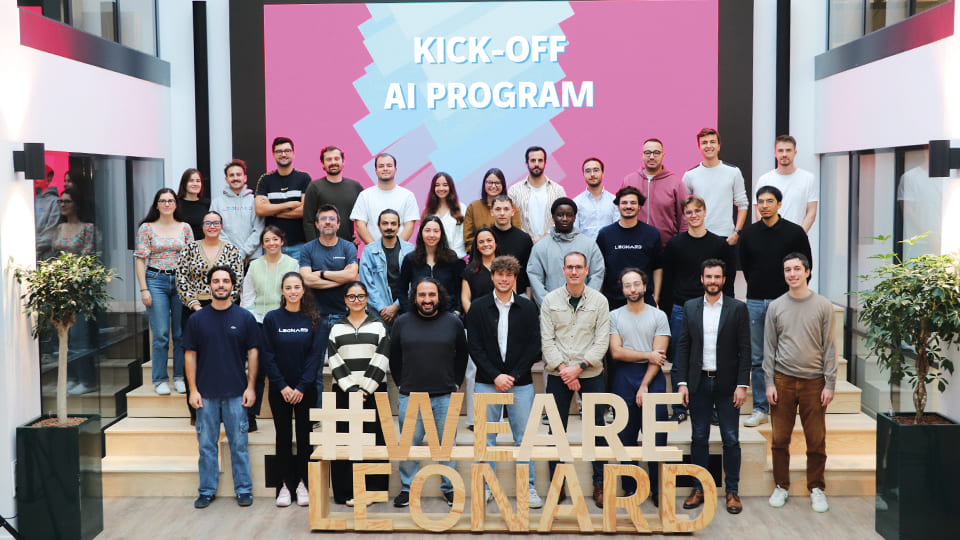
Leonard supported 15 AI projects offering solutions to operational needs in the Group over the year
Leonard
VINCI’s innovation and foresight platform, Leonard, was launched in 2017 to meet some of the Group’s biggest challenges for its businesses: the digital revolution, accelerated innovation cycles and the environmental transition. While the world undergoes transformation after transformation, Leonard detects trends, promotes innovation and brings together the players who are shaping the future of our cities and regions (270 events held in 2025).
The Intrapreneurship programme has supported 85 projects since 2017, and its 118 intrapreneurs have created 36 new entities, departments or services within VINCI. Since its launch in 2019, the Catalyst programme has spread to 14 countries, selected 71 innovative solutions and contributed to the signing of more than 1,000 contracts with the Group’s business units. In all, the supported enterprises have raised more than €1.9 billion (including the 2026 cohort).
Since 2019, the startups from the Seed programme (including the 2026 cohort) have raised a total of close to €70 million, created more than 300 jobs and collaborated with more than 1,000 of the Group’s employees in the field. Through a special programme, Leonard has helped to deploy artificial intelligence technologies on the ground and contributed concrete applications in all of VINCI’s activities (80 AI projects developed with the Group’s businesses since 2019, including 15 in 2025, in some 15 countries). Leonard heads a community of 250 AI experts in the Group, works with 12 centres of excellence involving the latest AI technologies and maintains close ties with training and research organisations such as HI! PARIS, of which VINCI is a founding member.

La Fabrique de la Cité published a study on urban soundscapes.
lab recherche environnement
lab recherche environnement is a scientific partnership between VINCI, AgroParisTech, Mines Paris-PSL and École Nationale des Ponts et Chaussées, which began in 2008. The research partnership aims to produce knowledge and tools to reduce the environmental impact of buildings and infrastructure. Renewed four times, the programme currently extends to 2028 and is endowed with a budget of €6 million over five years.
In 2025, it supported 25 PhD, post-doctoral and other research projects. Researchers have access to the Group’s many operations to test their innovations and can also rely on the long-term support of VINCI’s employees. Meanwhile, Group companies benefit from the researchers’ outputs to design innovations, invent new green solutions and accelerate the environmental transition of their business activities. The collaboration applies action research methods to better develop actionable solutions. In 2025, AgroParisTech’s work on soils and nature in urban environments enriched VINCI Construction’s exploration of land rehabilitation and the mitigation of heat island effects. Research into the circular economy conducted by École Nationale des Ponts et Chaussées also found practical applications at VINCI Energies and VINCI Construction, boosting the reuse of ventilation ducts and the recycling of aggregates.
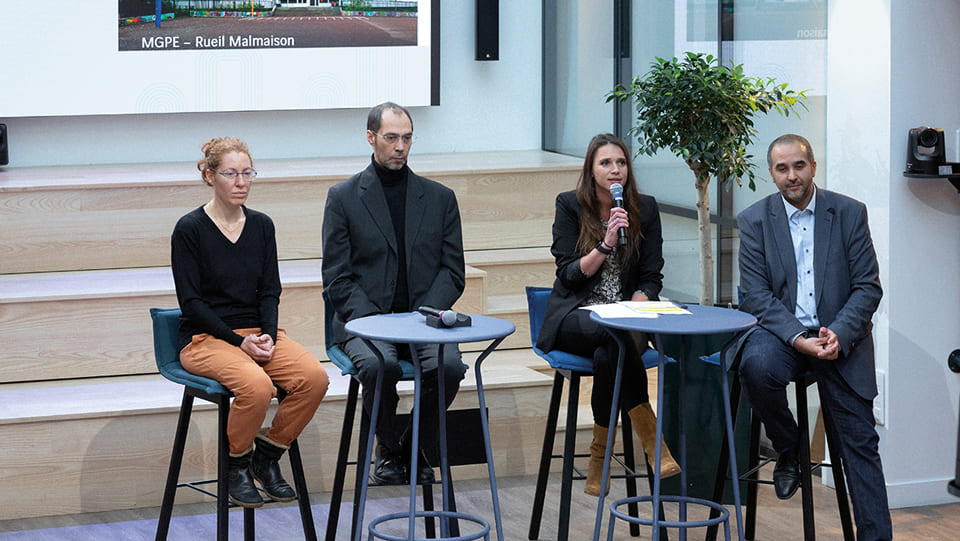
Contributions of artificial intelligence to project engineering, presented by lab recherche environnement.
La Fabrique de la Cité
VINCI’s think tank on urban transitions, La Fabrique de la Cité, strives to detect and analyse the major environmental, social and economic challenges facing cities, to identify and promote solutions offered by public officials and industry players in regions. In 2025, La Fabrique de la Cité continued to explore the topic of mobility, by co-hosting a series of symposiums with Leonard, VINCI Autoroutes and École Nationale des Ponts et Chaussées and by participating in workshops to gather direct input from residents of three cities: Valence (south-east France), Charleville-Mézières (north-east France) and Bordeaux (south-west France). La Fabrique de la Cité also continued to address transition challenges for medium-sized cities. As a partner of the Urban Projects Forum, it led conferences presenting innovative project methodologies and urban planning approaches implemented by public and private urban development players to promote human health. Energy issues were also addressed, in conferences on new sustainable, low-carbon sources of heat and by the publication of a case study on the deployment of geothermal energy.