
Decarbonised mobility
Alongside efforts to reduce the carbon footprint of motorway works and operations, VINCI Autoroutes is taking steps to decarbonise motorway usage (downstream Scope 3), an essential focus as road mobility currently accounts for over 90% of emissions from transport in France. Given their size, motorways have a central role to play in decarbonising road travel.
Light vehicles and long-distance electric mobility
Electric mobility has already made the vision of transforming motorways into low-carbon infrastructure a reality. Since end-2023, all service areas across the VINCI Autoroutes network have been fitted with charging stations for electric vehicles. It had a total of more than 2,100 charge points at end-2024, 75% of which dispense a full charge in half an hour. With this added infrastructure, electric mobility is now compatible with long-distance travel for light vehicles, and charging conditions are satisfactory. This is reflected in the strong rise in demand. The number of charges completed across the VINCI Autoroutes network doubled between January and December 2024, totalling nearly 2 million charging sessions over the year.
In order to increase the density of its electric infrastructure network, VINCI Autoroutes has also started to equip its carpool parking facilities, toll plazas and rest areas with charge points.
In the medium to long term, the significant growth expected in the number of electric vehicles (currently at 3% of all vehicles, the figure is predicted to grow to 15% in 2030 and 37% in 2035) means the number of accessible charge points on motorways will have to increase approximately sevenfold to ensure supply can service demand during peak traffic periods.
Electrification of heavy vehicles and innovation
Two charge points specifically designed for heavy vehicles were commissioned in late 2024 at the Palombières area on the A89, and others will be deployed in 2025. A study jointly conducted by VINCI Autoroutes, TotalEnergies, Enedis and six European manufacturers into the infrastructure required for the large-scale electrification of the long-distance transport of goods found that the demand for charging while travelling on the main road corridors in France could reach around 3.5 TWh per year by 2035. Handling the number of electric heavy vehicles, which will by then account for 30% of the fleet, will entail installing about 10,000 special charge points.
In addition to in-transit charging at fixed points, dynamic charging transfers power wirelessly to heavy vehicles as they drive on the road. This technology could improve the environmental performance of electric heavy mobility by considerably reducing the size of batteries while also eliminating range constraints. Solutions of this nature are being trialled on the Charge As You Drive project by a consortium, launched in 2023 and led by VINCI Autoroutes in association with VINCI Construction and several public and private sector organisations, as part of Bpifrance’s call for projects to promote “Automated Road Mobility, Connected and Low-Carbon Service Infrastructure”. The project, a world first on a motorway, is testing two dynamic charging solutions, one via induction and the other using a conductive central rail (see Close-up, page 51).
Shared mobility
The sixth solo driving survey, carried out by VINCI Autoroutes in September 2024 to measure vehicle occupancy rates on motorways around 13 major French cities, found that nearly 86% of drivers commuted to work alone, representing an average vehicle occupancy rate of 1.22. This is the highest rate of solo drivers since the survey began.
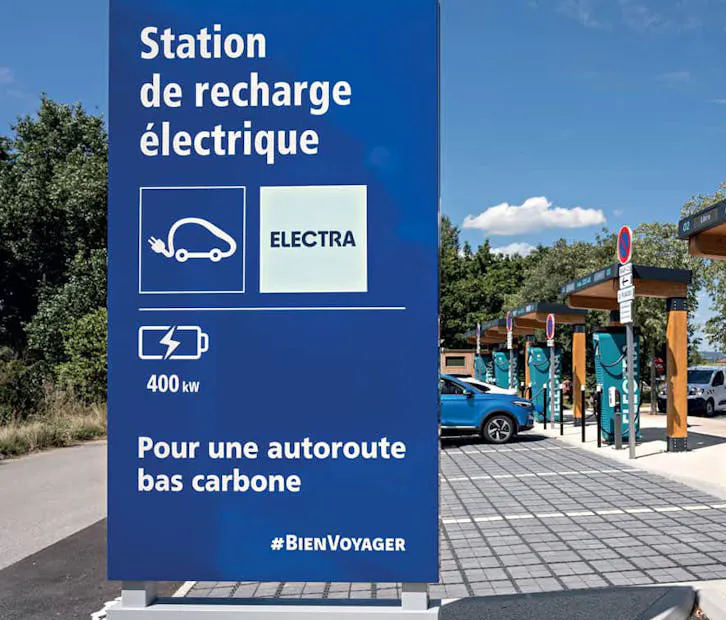 1Electric charging station at the Bornaron rest area on the A7 in the Drôme department.
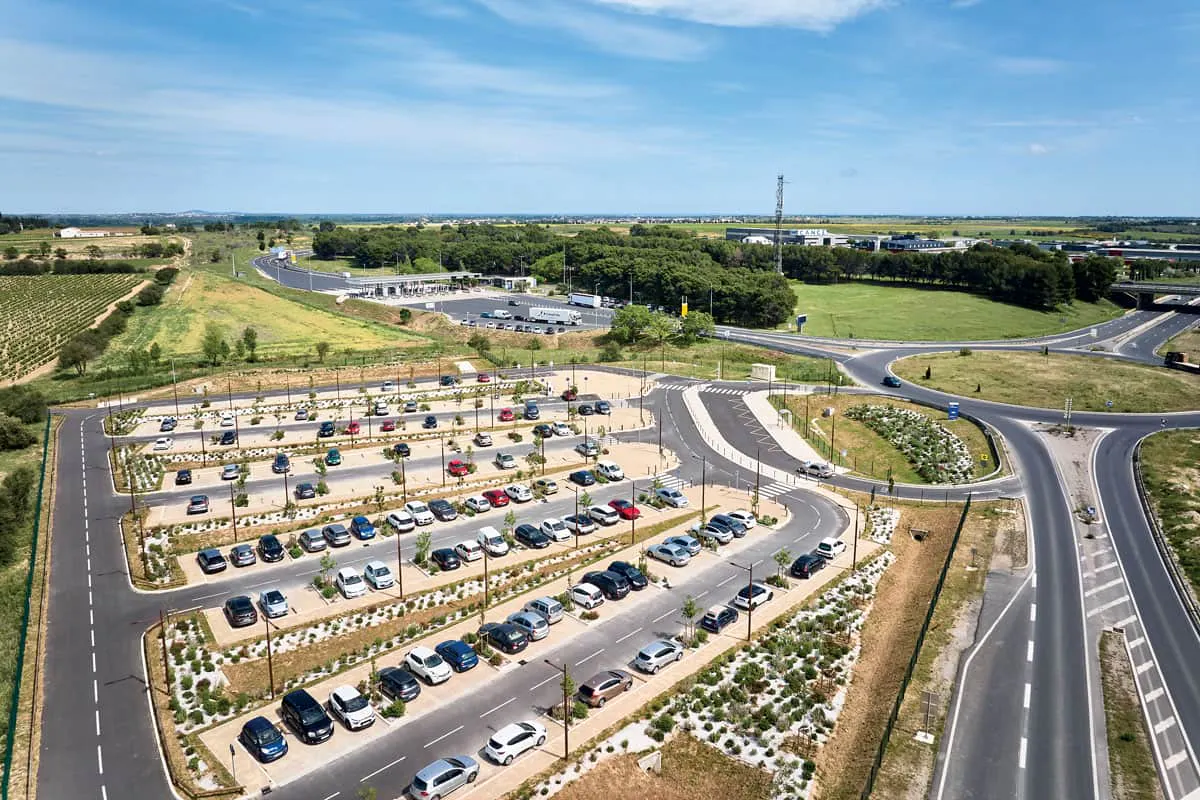 2The Béziers ouest carpoolarking facility on the A9 n southern France has 65 free-to-use parking paces.