

Motorways pave their way to dynamic wireless charging
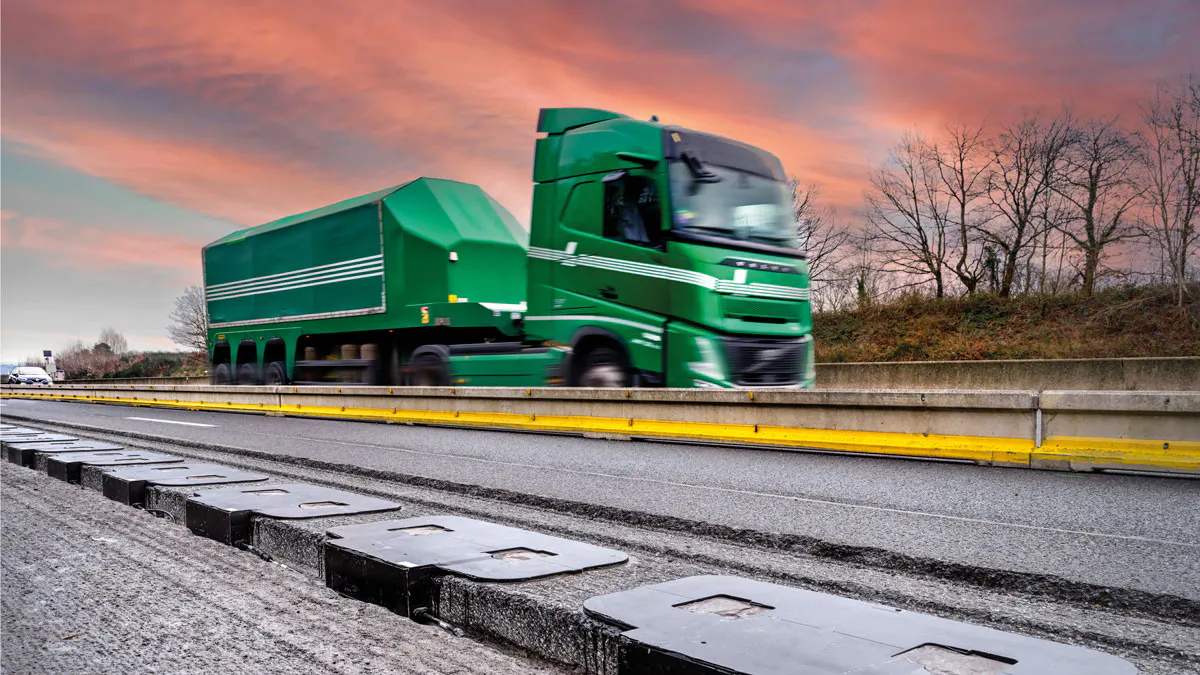
In a world first on motorways, a system to charge heavy vehicles as they drive is being trialled in real-world traffic conditions, heralding the advent of “electric motorways”.
To address the challenge of decarbonising road mobility, especially in transport and logistics, a consortium led by VINCI Autoroutes, in collaboration with VINCI Construction, Electreon, Gustave Eiffel University and Hutchinson, has equipped an initial stretch of the A10 some 40 km from Paris with dynamic wireless charging technology for heavy vehicles. Deployed on a large scale, this solution would directly power the electric vehicle and charge its battery at the same time. Ultimately, it would lead to a considerable reduction in the size of the batteries used in heavy vehicles, thereby optimising the footprint of electric heavy mobility both operationally (making vehicles less expensive, improving consumption and useful charge, and eliminating downtime for charging) and environmentally (reducing the need for raw materials and cutting the carbon footprint of battery production).
After lab tests to prequalify the materials, followed by full-scale tests on a closed site to ensure the mechanical durability of a road surface equipped with inductive charging technology, the project has reached the stage where it is being deployed on motorways. Following on from the work to electrify the roadside along the pilot stretch in Angervilliers south of Paris, VINCI Construction teams have been working since January 2025 to install induction coils under the road surface of the A10.
Work was carried out outside peak traffic hours. In the second quarter of 2025, vehicle prototypes (a heavy vehicle, a utility vehicle, a car and a coach) will be able to drive along the road in real-world traffic conditions.
The advantages of charging while driving:
+ 1 kmdriving range gained per kilometre travelled by heavy vehicles
+ 2 kmdriving range gained per kilometre travelled by light vehicles
Zoom
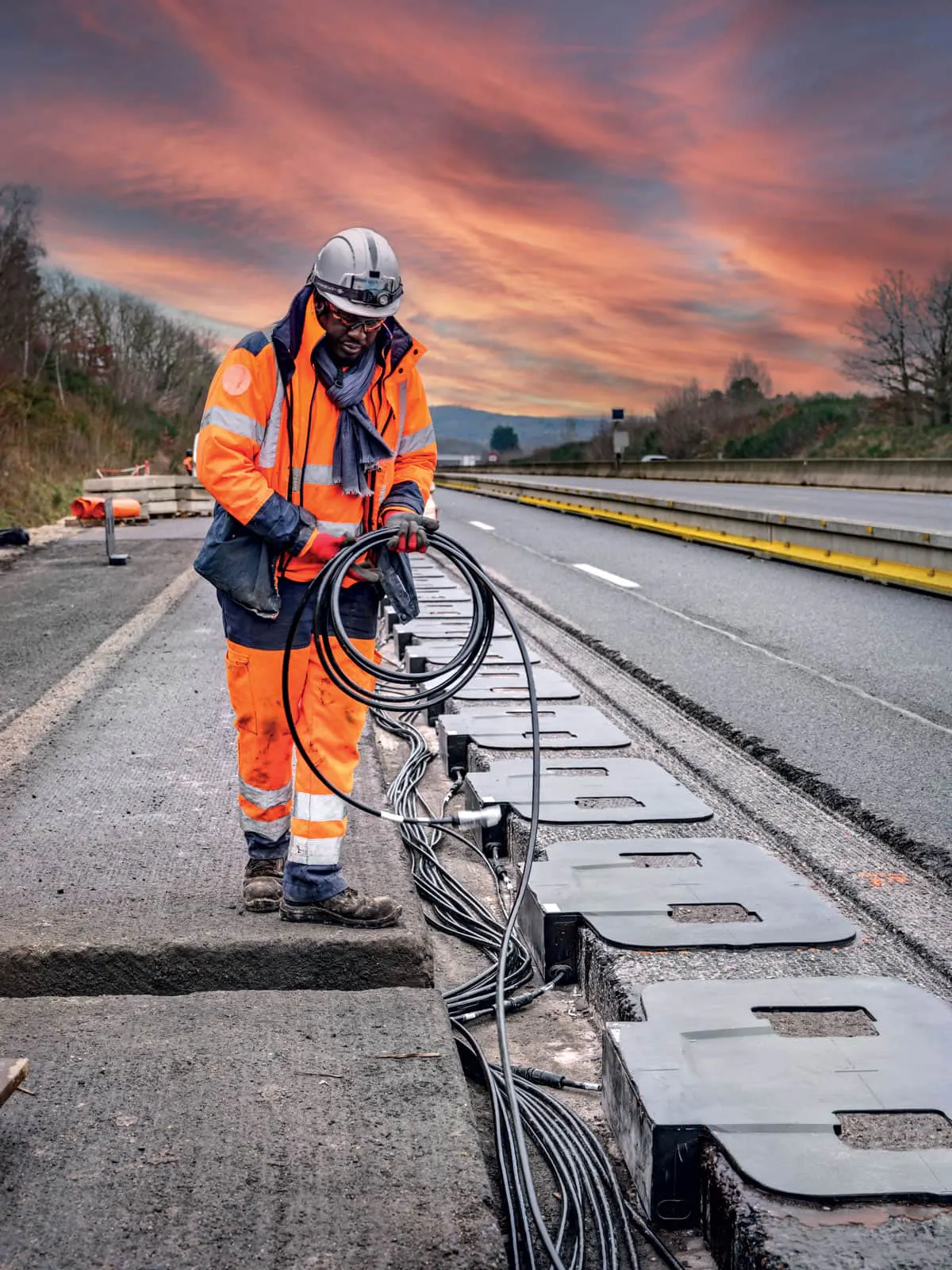
“Electreon is honoured to partner with VINCI on the world’s first electrified highway. Our next-generation dynamic charging with sub-surface coils transfers up to 200 kW to power heavy-duty trucks. Featuring cloud-based software, enhanced multi-unit connections, and greater grid flexibility, wireless charging is no longer just a vision—it’s reality.”