
Innovation & foresight
VINCI implements a policy of innovation, research, development and foresight thinking that connects its teams with academics and startups for close collaboration. All VINCI business lines participate in cross-business structures that span the Group, while pursuing innovation initiatives specific to their fields of expertise.
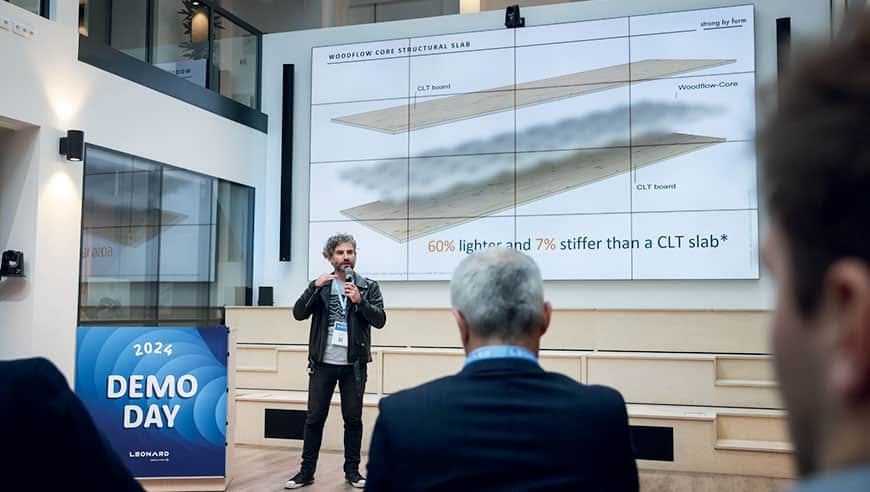
Seventeen startups attended Demo Day in May 2024 to present their projects after six months of acceleration with Leonard.
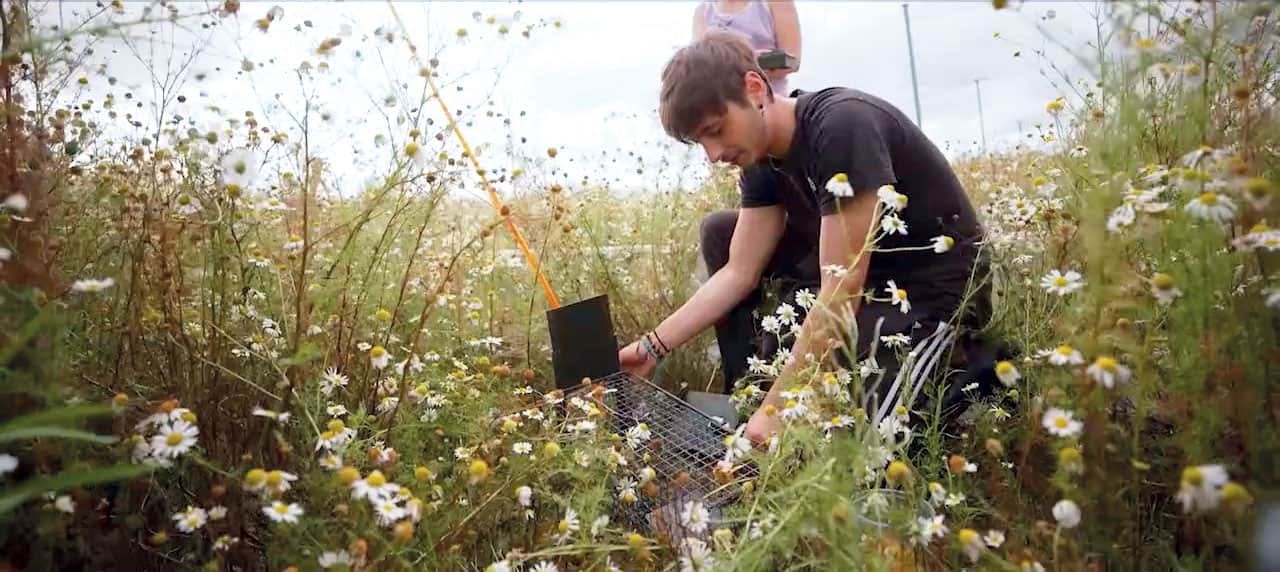
Fifteen thesis projects, including research on reducing urban heat islands, received funding from lab recherche environnement.
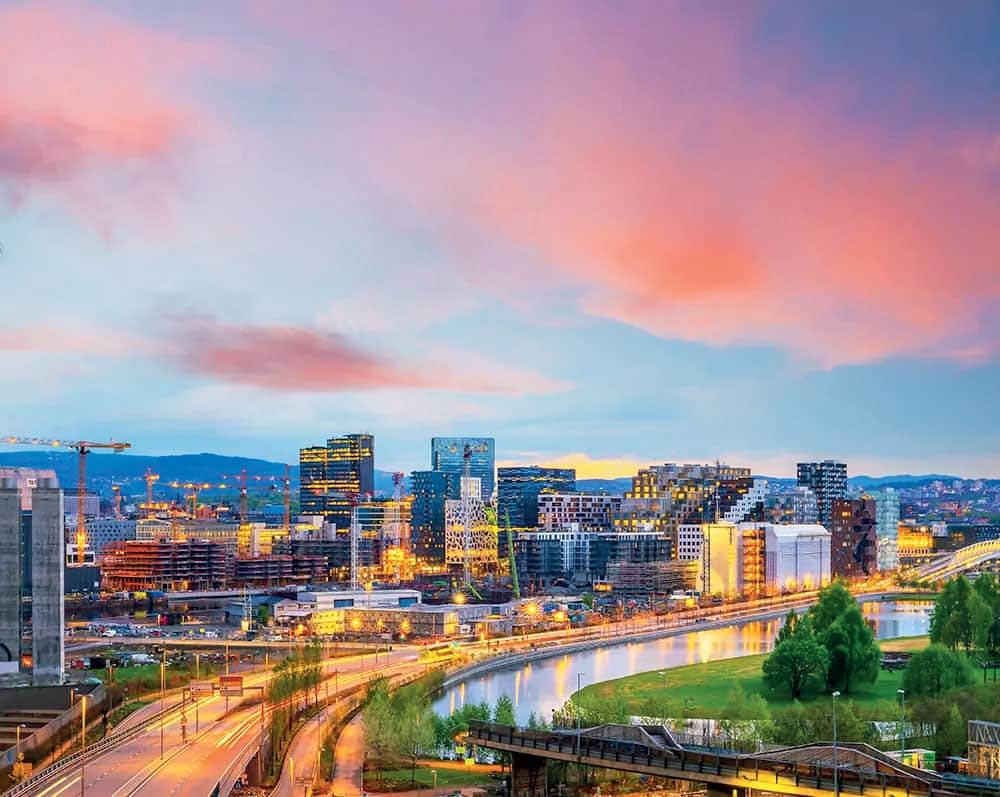
In July 2024, La Fabrique de la Cité organised a study trip to Oslo, Norway, to learn from its decarbonisation policy promoting the use of electric vehicles and active mobility.
Leonard
Leonard’s foresight work in 2024 focused on emerging risks in the Group’s various businesses, climate change adaptation and the transformations in the mobility sector between now and 2050.
Through its entrepreneurial innovation programmes, Leonard supported the incubation and development of 39 projects put forward either by a startup or by a Group entity or employee in 2024 (it has sponsored 215 initiatives in total since its inception in 2017). 2024 saw the arrival of hard tech startups bringing innovations such as new materials, robotics and other solutions for use in the construction sector. For the artificial intelligence programme, the Group’s teams submitted creative AI applications, especially in generative design and predictive maintenance. Also as part of the programme, several hundred employees completed training courses in artificial intelligence.
The transformations taking place in VINCI’s markets and businesses were explored in about 40 public events in 2024, during which more than 200 speakers took the stage. These events included a new “Decide Now” series of symposiums with École Nationale des Ponts et Chaussées, which will continue in 2025, conferences on mapping and the changes under way in water businesses, and a set of panel discussions on the use of artificial intelligence in the public works sector. The seventh Building Beyond festival attracted an audience of 1,500 to explore how cities are collectively adapting to climate change.
Lab recherche environnement
In 2023, VINCI renewed its partnership with the schools AgroParisTech, Mines Paris–PSL and École Nationale des Ponts et Chaussées for another five years, extending the collaboration that created the lab recherche environnement research programme in 2008 and contributing €6 million in funding. In 2024, it supported 15 PhD, post-doctoral and other research projects relating to VINCI’s businesses. Some of its work is conducted as part of the Research & Solutions programme, which introduces new research topics emerging from VINCI’s environmental solutions. “Mirror groups” of VINCI employees work alongside researchers to identify potential demonstrators among the Group’s building and infrastructure projects, adding a strong applied component to their scientific research. In addition, lab recherche environnement makes sure to share its research, made possible through scientific philanthropy. For example, it disseminated its findings through conferences attended by more than 1,500 people in 2024.
Three goals have been set for the current research programme: to consider planetary boundaries in reducing the environmental impact of building and infrastructure projects; to develop artificial intelligence solutions to decarbonise buildings and mobility; and to improve the health and well-being of city dwellers by reducing urban heat island effects and impacts on the water cycle.
La Fabrique de la Cité
La Fabrique de la Cité, a think tank on urban transitions founded and supported by VINCI, continued to dialogue with regional and local authorities at its fifth Medium-Sized Cities Meeting held in Libourne (south-west France) and at a workshop session in Gravelines (northern France), to gain insight into the public development projects carried out in these two cities. The think tank led a research cycle on the opportunities and risks of underground urban development, from which emerged an author’s note, a podcast and an exhibition with architect Dominique Perrault. Energy renovation, public lighting and permeable cities were other focuses of research, generating the publication of expert viewpoints and online events.
Mobility remains a leading concern at La Fabrique de la Cité, which organised a trip to Oslo to study Norway’s effective decarbonisation policy promoting the use of electric vehicles and active mobility.
Lastly, partnering with Leonard, École Nationale des Ponts et Chaussées and VINCI Autoroutes, La Fabrique de la Cité launched a series of symposiums bringing researchers, local officials, public policymakers and economic decisionmakers together to explore ways to successfully adapt to climate change.