
Interview
All the elements in our model work together to make us more resilient to short-term uncertainties, and more effective at seizing the immense opportunities arising for our business lines, now and in the future.
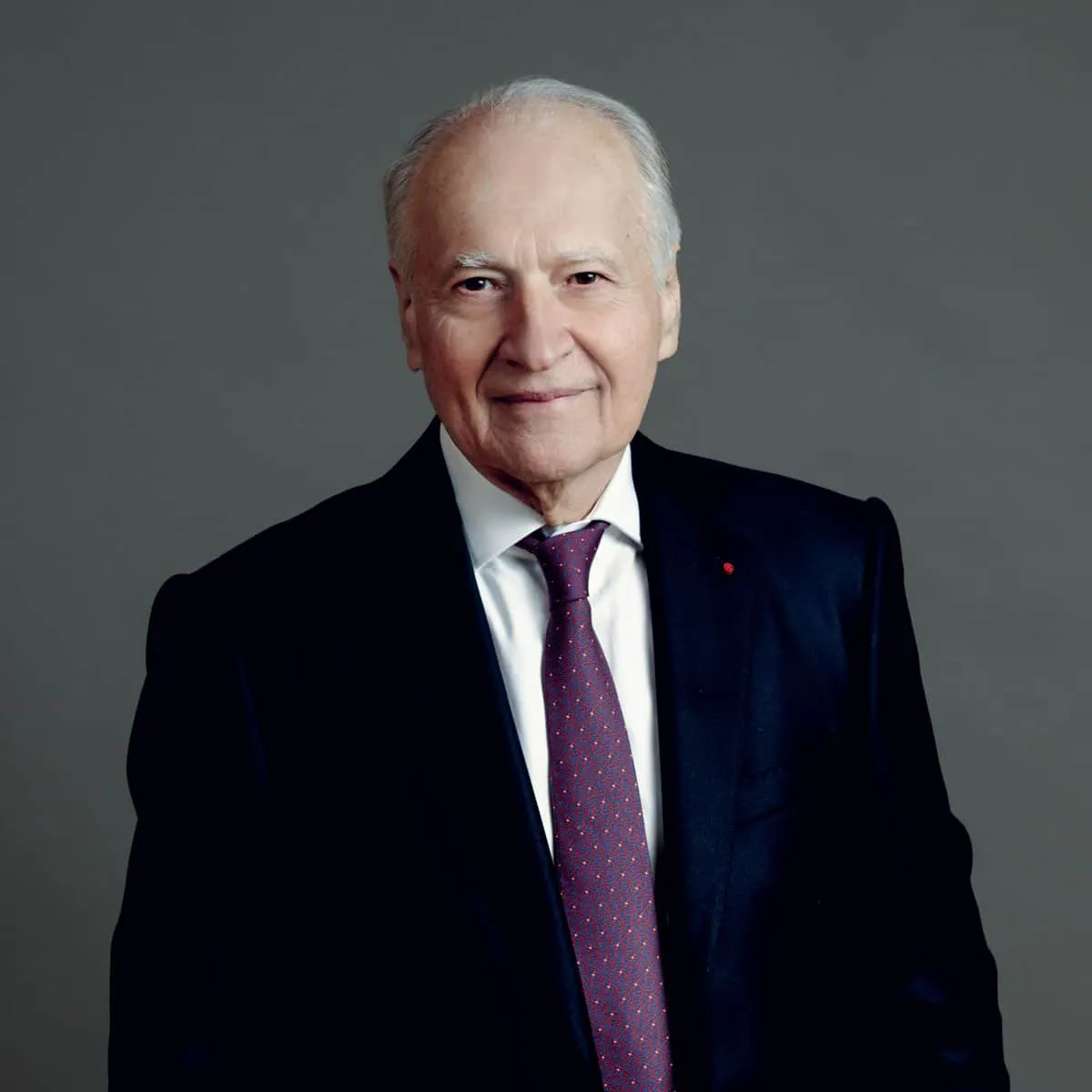
How would you sum up VINCI’s performance in 2024?
We confirmed, once again, that we can chart our course to virtuous growth. We increased our revenue and earnings despite a generally less favourable economic environment than in 2023 and the new tax on long-distance transport infrastructure operators in France, which added a €284 million charge. Very significantly, our free cash flow hit a new all-time high, giving us extra leeway to push ahead with our development.
These solid results stem from our model, which we have strengthened year after year. All the elements in our model work together to make us more resilient to short-term uncertainties, and more effective at seizing the immense opportunities arising for our business lines, now and in the future.
Precisely: what is keeping you resilient amid the geopolitical and macroeconomic uncertainties today?
Firstly, our decentralised model. It is designed to empower our teams to take initiative on the ground. Now that agility is becoming a cardinal value everywhere, we see just how modern our model truly is. At its core, VINCI consists of more than 4,200 autonomous business units operating in their respective markets and geographies, while sharing the strong culture that unites us as a group and the sound management practices that sustain it. And this is reflected in our steady results year after year.
Another – equally essential – factor is the variety of business lines and geographies we operate in. Our three main businesses – Concessions, Energy and Construction – are active in a constantly growing number of fields of expertise, contracts, regions and countries. Our international expansion is the most visible sign of this: we generate nearly 60% of our revenue outside France today, up from about 40% only a decade ago, and now make most of our net income outside France. We are now a significant player in 10 or so European countries as well as in the United States, Canada, Brazil, Australia and New Zealand.
What are the trends looking like in each of VINCI’s three businesses, starting with Concessions?
Our concessions are the bedrock of our long-term strategy. The structural demand for mobility that is buoying our Concessions business also justifies our vigorous expansion policy on this front. Through VINCI Airports, we are the world’s leading private operator in the sector, managing 72 airports in 14 countries, and our overall passenger numbers rose above their pre-Covid levels in 2024. The recovery is turning out to be considerably brisker than industry forecasts suggested, and we are stronger today than we were before the pandemic: our operating income, for instance, is substantially higher than in 2019. In 2024, we also accelerated our expansion, notably securing a freehold concession for Edinburgh airport and a new concession for Budapest airport.
Vehicle traffic on VINCI Autoroutes’ network in France also remained steady despite the less favourable economic circumstances and the blockades which took place in the first half of the year. Outside France, VINCI Highways continued expanding its network with new concessions in the United States and Brazil, and opened a new motorway, built by our local roadworks companies, in the Czech Republic. We are becoming a major worldwide player in this sector as well.
Our long-term strategy for concessions also includes initiatives to decarbonise mobility and our infrastructure. For example, Toulon Hyères airport reached net zero emissions in 2024 and Lyon-Saint Exupéry airport will do so in 2026, thanks to ambitious environmental upgrade programmes like the ones we are rolling out across all the airports of our network. I will add that we have charging stations at all our motorway service areas in France. Drivers topped up their batteries at our 2,100-plus charge points about 2 million times in 2024 – which was twice as many as in 2023. So we are playing an active part in enabling long-distance travel in electric vehicles. Looking further into the future, the investments needed to turn airports and motorways into low-carbon, climate-resilient infrastructure assets on a massive scale will make concession-based contractual frameworks all the more suitable, and this will in turn add value to our model.
Did the Energy business lines continue to grow?
We decided to develop in these fields long before the climate emergency pushed energy to the top of the agenda. And the remarkable growth they are achieving nowadays shows that we made the right strategic move. Revenue in our Energy business, which was already high in 2023, increased by 6% in 2024 and is catching up with our longest-standing business, Construction. Our two Energy business lines complement each other and are both taking full advantage of the two megatrends underlying their markets – the energy transition and digital transformation. VINCI Energies is leveraging its very close ties with customers and its model combining organic and external growth; Cobra IS is able to deliver large turnkey projects on top of managing its flow business.
We are already seeing this in their order books, and the trend will gain momentum as the vital need to decarbonise our economies is bringing about a rising number of projects. Some of these projects involve low-carbon electricity production, transport and distribution infrastructure; others relate to manufacturing, buildings and information technology, sectors where the energy transition overlaps with a variety of issues ranging from competitiveness to overhauling processes and on to evolving lifestyles.
We also take a long-term approach to electric infrastructure when we build our portfolio of renewable energy production assets. Its total capacity, in operation or under construction, stood at 3.5 GW at the end of 2024. And we are setting up high-voltage power lines through public-private partnerships – for instance in Brazil and Australia – covering not only their deployment but also their operation and maintenance over several decades.