

Hydrogen as a way of decarbonising mobility
While VINCI has taken positions in a new clean fund dedicated to the hydrogen ecosystem, VINCI Airports has committed to developing this new source of energy in the air transport sector.
— On 1 October 2021, VINCI joined in creating the world’s largest clean hydrogen infrastructure fund, which has already secured initial commitments of €1 billion out of a total goal of €1.5 billion. Air Liquide, TotalEnergies and VINCI have led the way in setting up and aggregating commitments to the fund – which also counts other major international players – and each has pledged to invest €100 million.
The objective is to accelerate the growth of the clean hydrogen ecosystem by investing in large, strategic projects and leveraging the alliance of industrial and financial players. Meanwhile, Airbus, Air Liquide and VINCI Airports have signed a partnership to promote the use of hydrogen in airports and build the European airport network to accommodate future hydrogen aircraft. Lyon-Saint Exupéry, VINCI Airports’ centre of excellence for innovation, has been chosen by the three partners as the pilot airport. In a first phase from 2023, a hydrogen gas distribution station will be deployed to supply the airport’s ground vehicles (buses, trucks, runway machinery, handling equipment, etc.).
Liquid hydrogen infrastructure for delivering hydrogen into the tanks of future aircraft will be deployed in a later phase. The three partners will study the possibility of equipping VINCI Airports’ European network with the hydrogen production, storage and supply facilities needed for use on the ground and aboard aircraft. Airports, at the crossroads of different mobility modes, today look to be particularly appropriate locations for developing this new source of energy and making the infrastructure true hubs of the hydrogen sector.
2023
Hydrogen gas distribution station
at Lyon-Saint Exupéry Airport.
2035
Entry into service of the future Airbus
zero-emission hydrogen-powered aircraft.
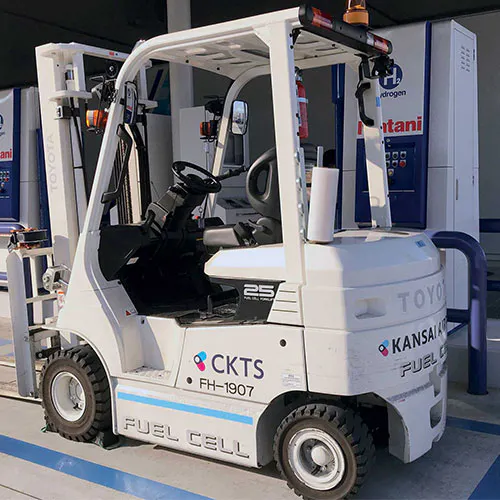
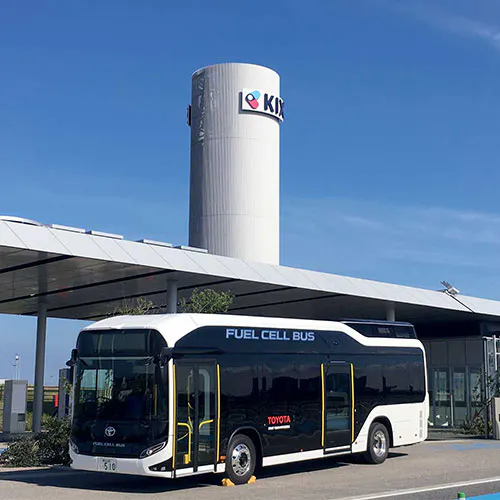

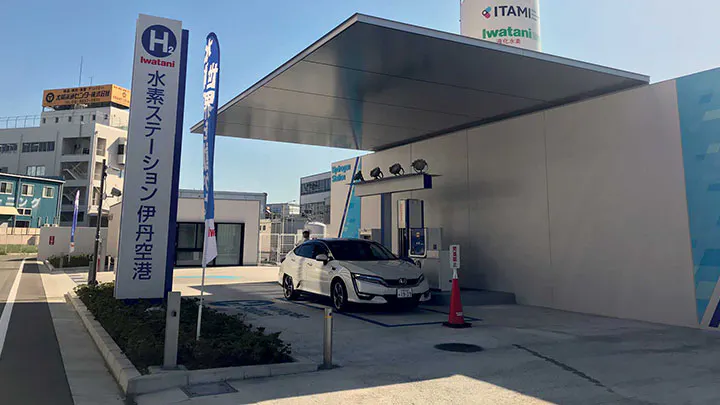
In Japan, Kansai International and Osaka Itami airports are already equipped with hydrogen gas distribution stations for ground vehicles, primarily buses and the forklift trucks used in freight operations. The two airports, together with Kobe, the third airport managed by VINCI Airports in Japan, have achieved the highest accreditation (Level 4) in Airports Council International’s Airport Carbon Accreditation programme (ACA).