
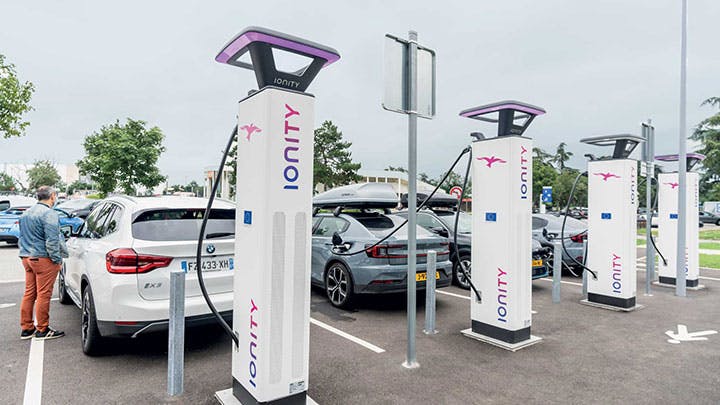
At the end of 2021, 55% of the VINCI Autoroutes service areas were equipped with electric vehicle charging stations.
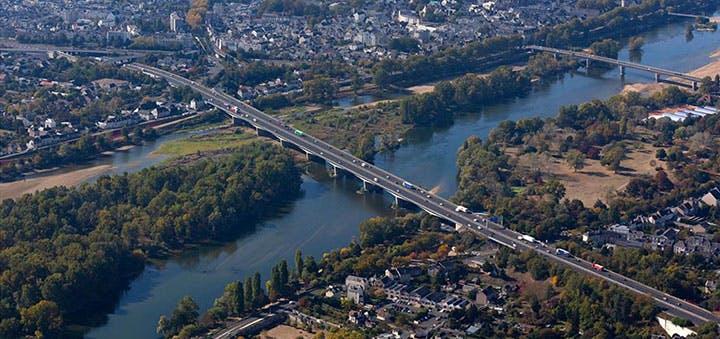
In Tours, where the A10 runs through the city, VINCI Autoroutes has signed a low-carbon motorway agreement with city authorities to better integrate the infrastructure into the city’s urban mobility system.
● TOWARDS “ZERO WASTE” RECYCLED MOTORWAYS
As a programme manager, VINCI Autoroutes encourages the use of recycled and renewable materials for its roadworks. In 2021, 95% of the asphalt mix from renovation works on its network was recycled, including 42% that was reused in its own roadworks. It aims to increase this percentage to 45% by 2030. In some trial surface renovations, up to 76% of the old pavement is recycled. For example, on a 25 km stretch of the A89 in the Auvergne-Rhône-Alpes region in south-east France, which was renovated in collaboration with Eurovia France, 60,000 tonnes of mix were reused on site, and CO2 emissions were half those generated in a traditional renovation operation.
On its own operations, VINCI Autoroutes recycles or reuses 75% of the waste generated by its own activities as secondary raw materials and aims to increase that amount to 100% by 2025. It also encourages its service area users to reduce their waste production and improve the way they recycle (awareness campaigns, simplified signage, nudges). VINCI Autoroutes is working with the service area commercial installations to experiment solutions that avoid producing waste at source and eliminate plastic packaging. During the summer holiday period, the VINCI Autoroutes Foundation ran an anti-littering campaign encouraging users to stop throwing rubbish out of their car windows – something around one in four road users does, according to an Ipsos survey. In a 45-second video, which notched up 6 million views on the social networks, the campaign spotlights this bad habit, which is dangerous for the environment and for other road users.
● TOWARDS LAND REHABILITATION OF MOTORWAY AREAS
VINCI Autoroutes aims to do more than meet the regulatory requirements to reduce the impacts of motorway infrastructure. It wants to be a positive contributor to the restoration of natural habitats. That is why the environment represents a growing share of its investment in motorway construction and renovation (nearly 25% of the total cost of the A355, for example), and enlists the expertise of VINCI Autoroutes in ecological engineering and of its scientific and non-profit partners in nature and wildlife. Where its own operations are concerned, VINCI Autoroutes is committed to managing its network’s green spaces responsibly and aims to eliminate all phytosanitary products from green area maintenance (in 2021, they had been cut by 59% compared with 2018, and by 95% compared with 2009) and develop regeneration plans for motorway zones. For example, more than 700 different plant species have been introduced at the Saugon service area on the A10 in south-west France, as part of a scheme carried out in collaboration with France’s National Forest Office, the ONF, which concerns a total of 30 sites on the network’s west Atlantic stretch.