
Reducing carbon footprints of buildings, infrastructure and mobility
VINCI has pledged to reduce the carbon footprint of its activities (Scopes 1 and 2) by 40% by 2030, while helping its customers and infrastructure users to diminish their own impacts. The Group aims to curtail its Scope 3 emissions by 20% over the same period, and it has translated this overall goal into a series of initiatives, services and solutions for each business line.
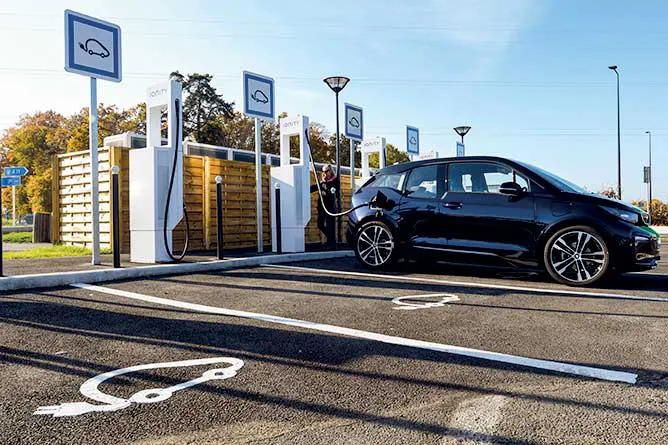
Electric mobility for long distances
VINCI Autoroutes is committed to promoting low-carbon mobility on motorways. At the end of 2021, 97 of its 180 service areas featured electric vehicle charging stations, and 100% of its network will be equipped by 2023. VINCI Autoroutes is also decarbonising transport by providing more carpooling parking and multimodal transport hubs just outside large urban areas.
Nearly half of VINCI Autoroutes’ light operating vehicles had already been converted to electric power by the end of 2021.
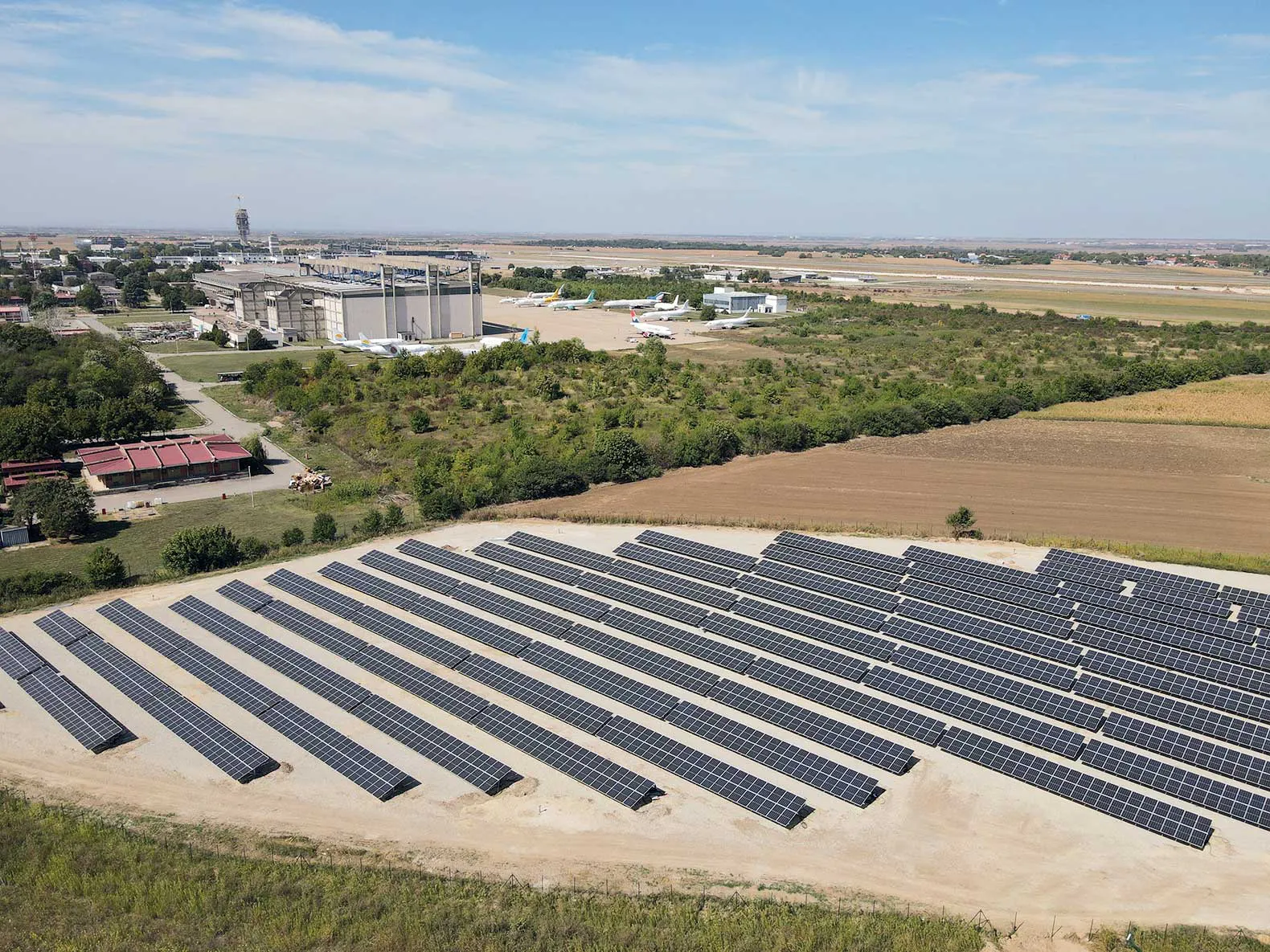
Renewable energy for airports
To achieve net zero emissions in the European Union by 2030 and across all its airports by 2050, VINCI Airports is rolling out a large-scale solar farm project. In 2021, the airports in Faro and in Belgrade installed solar plants, and the Lyon-Saint Exupéry and Stockholm Skavsta airports will also commission facilities in 2022. At the end of 2021, the installed capacity of its network had already exceeded 30 MWp.
Every airport in the VINCI Airports network participates in the Airport Carbon Accreditation (ACA) programme developed by Airports Council International. While London Gatwick, Lyon-Saint Exupéry and Guanacaste airports have achieved Level 3+ (Neutrality) accreditation, the three airports operated by VINCI Airports in Japan achieved the highest level of accreditation (Level 4, Transformation) in 2021 – the first in the country to do so.